How did the infant sun form? Scientists get surprising new insights from 4.6-billion-year-old space dust
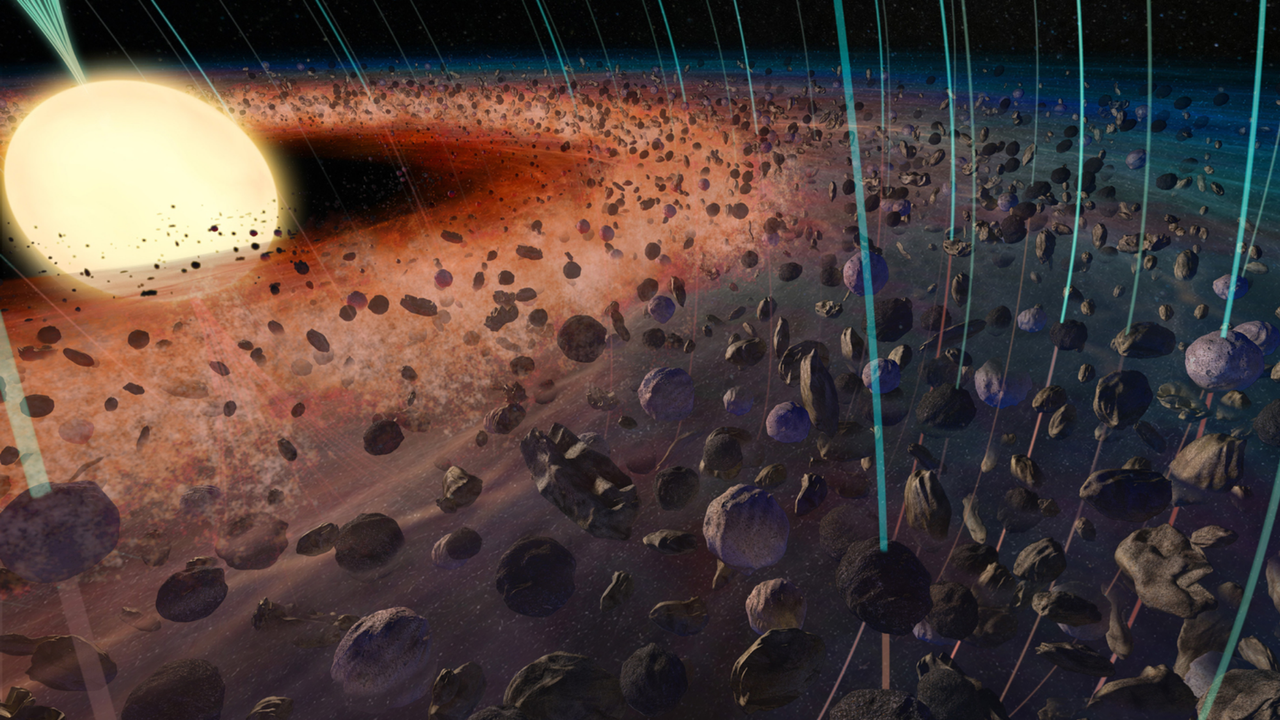
We tend to think of creation as a violent, chaotic event—a supernova's bang, a furnace's roar. But this new research from meteorite dust paints a far more delicate portrait of our solar system's birth. Those 4.6-billion-year-old grains, preserved in the cold vacuum of space and later delivered to Earth as cosmic messengers, have kept a quiet ledger of the magnetic fields that shaped our origins. As reported by Space.com, the implication is that magnetism wasn't a footnote in solar system formation—it was one of the lead actors.
This is the kind of revelation that should make us recalibrate our mental models of star birth. For decades, the prevailing narrative emphasized gravity as the great cosmic sculptor, pulling matter inward until pressure ignited fusion. But gravity alone can't explain how angular momentum was shed, or how material migrated through the protoplanetary disk in those critical first few million years. Magnetism, the researchers suggest, acted as a kind of cosmic brake and conveyor belt simultaneously—guiding particles, channeling currents, and literally weaving the fabric of the early solar system.
What excites me most, from a speculative standpoint, is the echo this has in our own technological future. If magnetic fields were so instrumental in birthing a star, what does that mean for our ambitions to become a multiplanetary species? We're already experimenting with magnetic shields for spacecraft, plasma sails that ride solar winds, and even proposals to use artificial magnetospheres to terraform Mars. We are, in a very real sense, trying to reproduce at a miniature scale what the universe accomplished on a stellar one.