JWST finds early galaxies may be 4 times more massive than thought
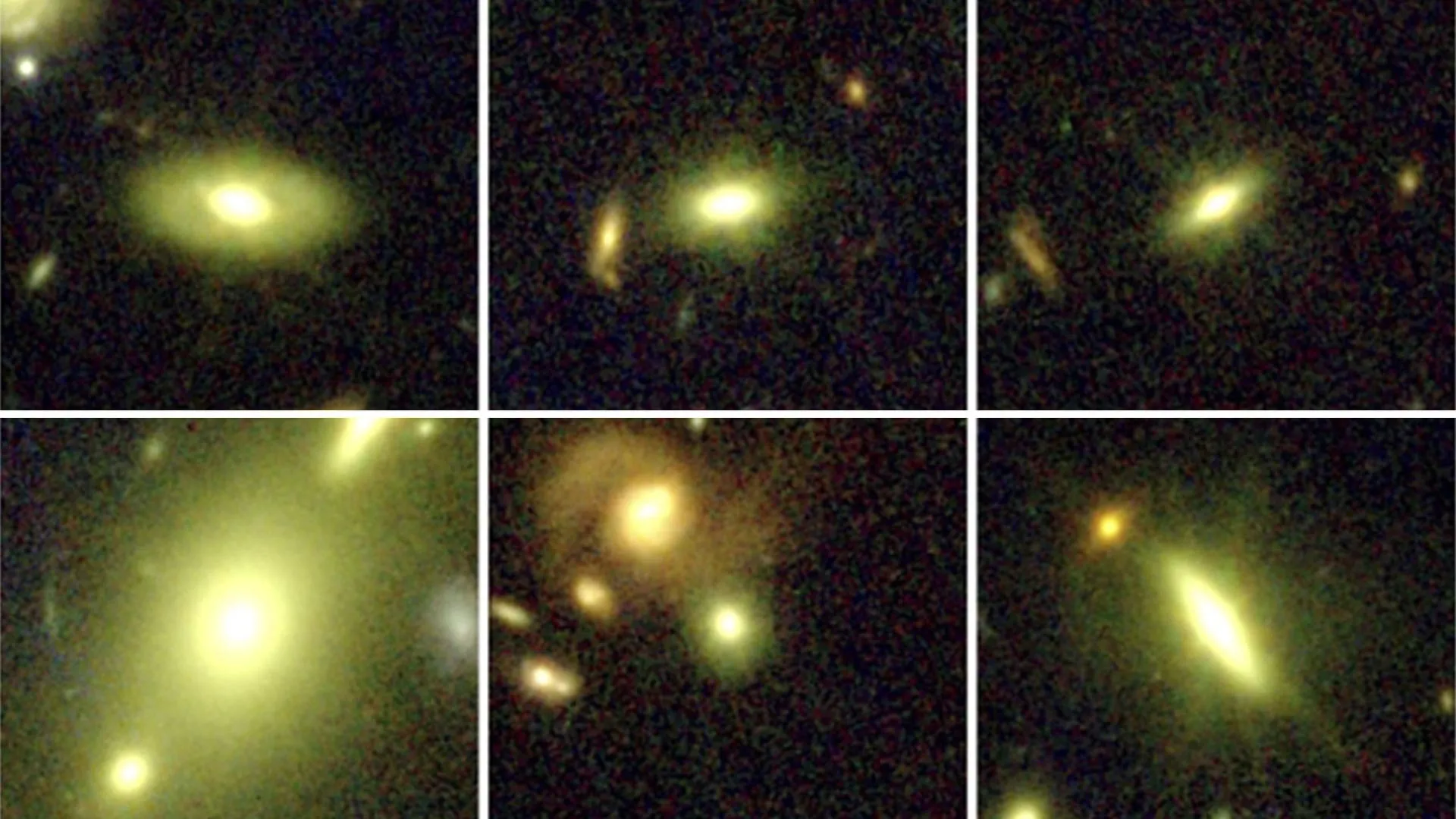
This is the kind of finding that makes you rewind the cosmic tape and question everything. We've been staring at these early galaxies through the lens of JWST, marveling at their surprisingly mature shapes, but we were only seeing the tip of the stellar iceberg. The idea that there's a whole population of faint, low-mass stars lurking in the shadows—stars that we simply couldn't detect until now—is a humbling reminder that our telescopes only show us the brightest actors on the stage. The universe is a master of camouflage, and JWST is finally peeling back the layers.
What's truly wild here is the implication for galaxy formation models. We thought we had a decent handle on how galaxies grow: you start with dark matter halos, gas falls in, stars ignite, and mergers happen over billions of years. But if these early galaxies are already four times more massive than we thought, that means they assembled their stars much faster and more efficiently than our physics allows. It's like finding a fully grown oak tree in a fossil record that only had room for saplings. Either our understanding of star formation at high redshift is fundamentally flawed, or there's some exotic process at play that we haven't even begun to theorize about.
And then there's the planet angle—my favorite part. If these faint, low-mass stars were abundant in the early universe, that means the raw materials for planets were swirling around just a few hundred million years after the Big Bang. Low-mass stars are precisely the ones most likely to host rocky planets in their habitable zones. So we're not just revising galaxy masses; we're potentially rewriting the timeline of when the first potentially life-bearing worlds could have existed. The universe may have been seeding the ingredients for life long before our sun was even a twinkle in the galaxy's eye.
This discovery is a beautiful mess. It tells us that our cosmic origin story is still incomplete, and every time we think we've got the plot, the universe throws in a twist. But that's the thrill of science—the more we look, the weirder and more wonderful it gets. JWST is not just a telescope; it's a time machine that's making us rewrite the history books, one faint star at a time.