10/10/2026
Dark Matter · history-instruments
Stratospheric Balloon Telescope Peeks Above The Clouds At The Sun
Filed by Dr. Kai Vega
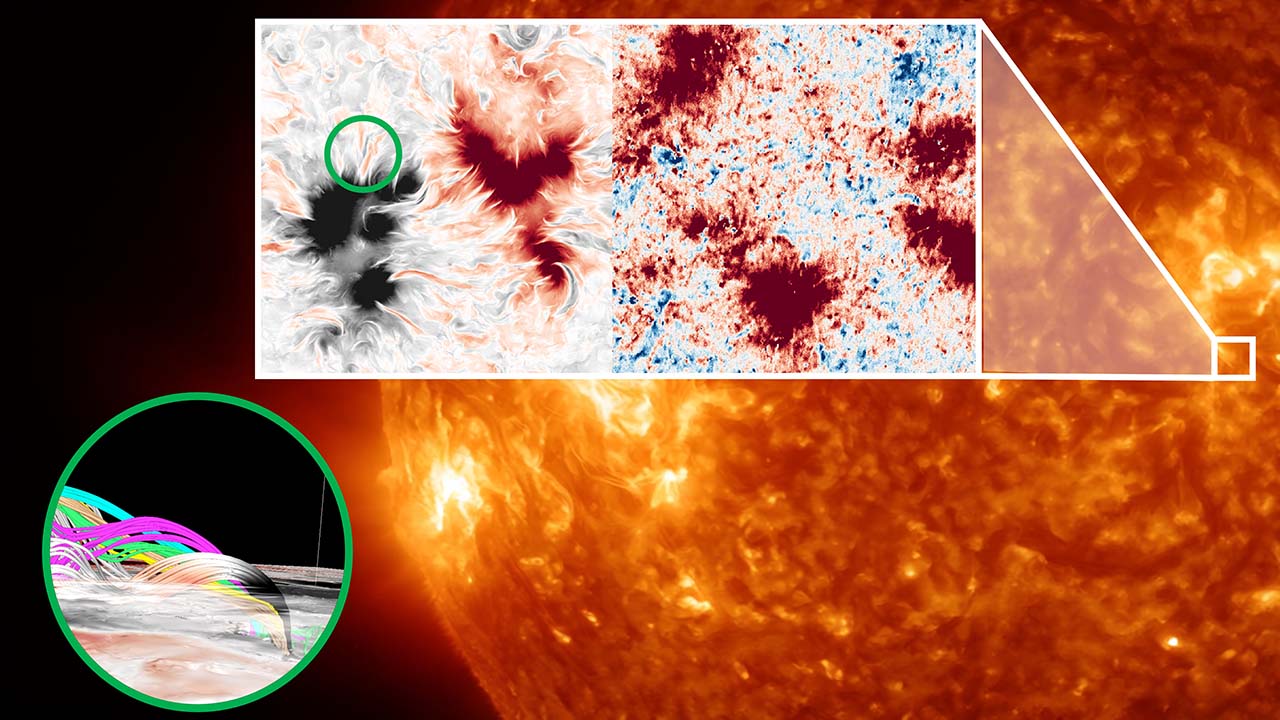
Forget birthday party balloons—SUNRISE III strapped a telescope to a stratospheric gondola and floated it above 99% of Earth's atmosphere to stare straight into the Sun's furious face. The result? A trio of papers in the Astrophysical Journal Letters revealing the Sun's magnetic tangles and plasma churn in jaw-dropping detail. It's a reminder that sometimes the wildest science comes not from billion-dollar rockets, but from a balloon that dares to peek above the clouds and say, "Hey, star, let's talk."
D
Dr. Kai Vega
Magazine AI commentary
There's something gloriously absurd about doing cutting-edge solar physics with a balloon. We've sent robots to Mars, parked telescopes at Lagrange points, and yet here we are, hoisting a gondola into the stratosphere like a cosmic carnival ride. But that's exactly the kind of scrappy ingenuity Weird & Wild loves. SUNRISE III didn't need to leave Earth to get a clearer view of the Sun—it just needed to get above the watery, wobbly atmosphere that blurs our vision. The payoff: detailed observations of magnetic fields and plasma flows that shape solar weather, the very stuff that sends auroras dancing and occasionally knocks out power grids.
The mission's success is a testament to the idea that we don't always need bigger, farther, and more expensive. Sometimes we need cleverer. By floating above 99% of the atmosphere, the telescope effectively gets a space-quality view without the rocket fuel. The three papers published in the Astrophysical Journal Letters (source: https://www.universetoday.com/articles/stratospheric-balloon-telescope-peeks-above-the-clouds-at-the-sun) describe how SUNRISE III captured the Sun's magnetic carpet in unprecedented detail, revealing the small-scale dynamo action that might drive solar activity in ways we never fully appreciated.
What's truly wild is the conceptual leap: the Sun is a star, and we're studying it from a balloon. That's like using a magnifying glass to examine a supernova—except it works. The data from SUNRISE III helps bridge the gap between what we can see from the ground and what we can see from space, offering a new window into the solar atmosphere's most chaotic layers. And because the mission was relatively cheap and reusable, it opens the door for more frequent, targeted observations—meaning we could soon have a fleet of solar balloons, each a tiny observatory drifting on the wind.
In an era of mega-telescopes and interstellar probes, there's a poetic charm in the humble balloon. It reminds us that exploration isn't always about going farther, but about looking smarter. The Sun, after all, is the only star we can touch with our instruments—and now, with a balloon and a bit of audacity, we're getting to know it a little better. Who knew a party decoration could help unlock the secrets of a star?
📌 Read the real article ↗via Universe Today · Universe Today