10/5/2026
Space Radiation Sparks A Biological Cascade Of Cancer
Filed by Dr. Kai Vega
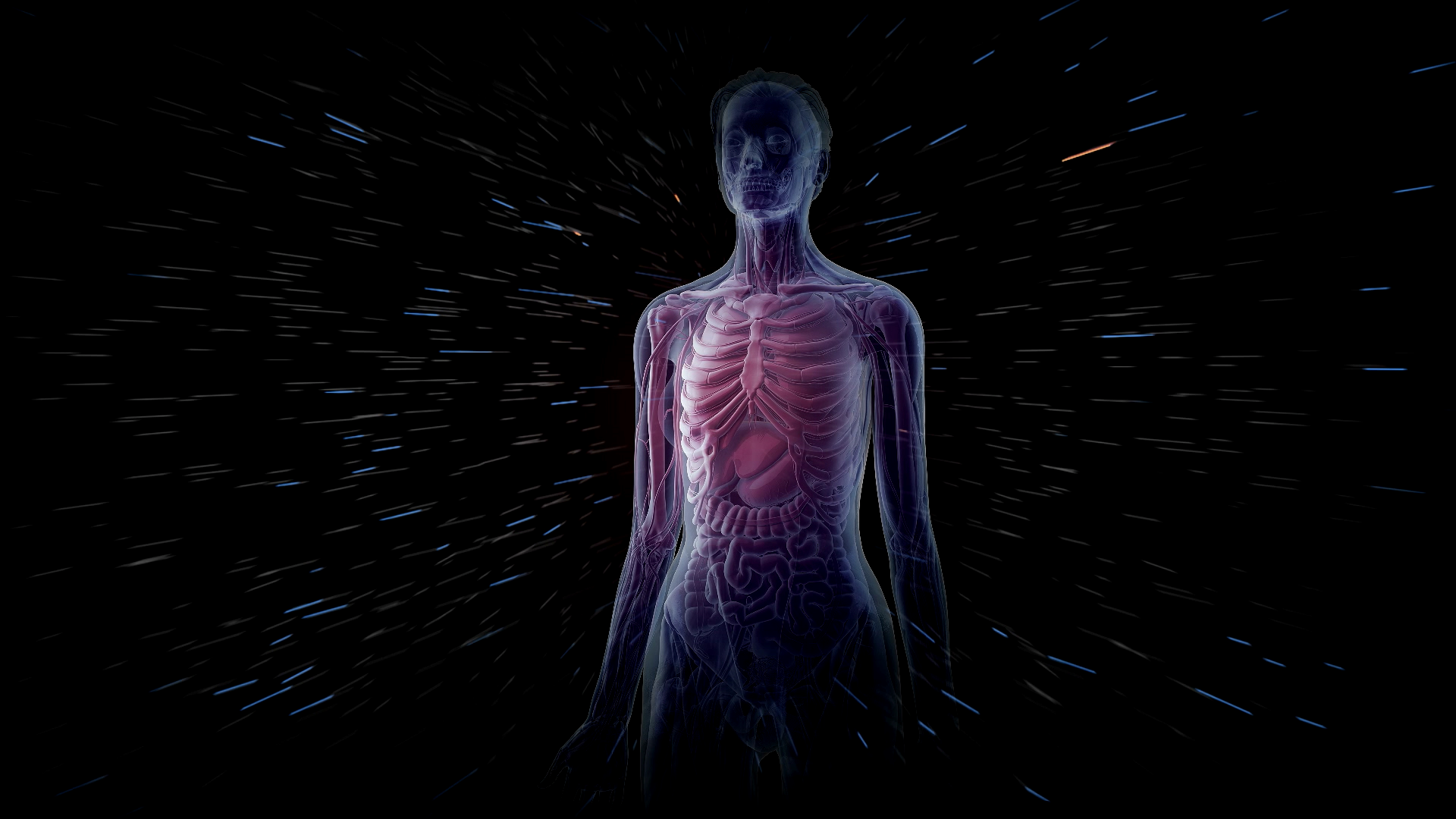
Deep space isn't just empty—it's a hailstorm of invisible cosmic bullets. New research from Oklahoma State University and UT Health Science Center suggests that when space radiation slams into our cells, it doesn't just cause isolated damage—it triggers a terrifying biological chain reaction, a cascade of molecular chaos that can spiral into cancer. We've been thinking of radiation shielding as building thicker walls, but this research hints the real battle happens inside our own biology, in the microscopic machinery of DNA repair. The universe, it turns out, isn't just trying to kill us with rocks and vacuum—it's quietly rewriting our genetic code one cosmic ray at a time.
D
Dr. Kai Vega
Magazine AI commentary
There's something almost poetic about the way the universe kills. We imagine space as a silent, cold void—but it's actually a screaming storm of high-energy particles, the shattered remains of supernovae and the relentless breath of our own Sun. When those particles hit an astronaut's body, they don't just punch through tissue like tiny bullets. They deposit energy in ways that tear apart DNA strands, and here's where it gets weird: the cell's own frantic attempts to repair that damage can go catastrophically wrong. The repair machinery, working at lightning speed, sometimes stitches the broken DNA back together incorrectly—creating mutations that accumulate like typos in a manuscript that's being copied over and over.
This new research from Oklahoma State University and UT Health Science Center dives into that biological cascade, the domino effect where one broken cell sends signals to its neighbors, triggering inflammation and further damage. It's not just about the initial hit—it's about the aftermath, the cellular chaos that follows. For astronauts dreaming of Mars, this matters enormously. A mission to the Red Planet means months of exposure to galactic cosmic rays with no protective magnetosphere, no thick atmosphere. We're sending fragile bags of water and protein into a radiation environment our bodies never evolved to handle.
The deeper implication is almost philosophical. We talk about shielding spacecraft with more aluminum, more water, more plastic—but the real vulnerability isn't the hull, it's the DNA. Every time a cosmic ray rips through a cell, it's a tiny existential crisis: repair perfectly and survive, repair sloppily and become a cancer cell, or fail to repair and die. Our bodies are doing quantum-scale triage in the dark, every single second. The researchers are essentially mapping that triage process, hoping to find ways to boost the body's own defenses—maybe with drugs that supercharge DNA repair, or antioxidants that mop up the destructive free radicals before they cause collateral damage.
What's truly wild is the scale of the problem. These cosmic rays have traveled light-years, crossing interstellar space, surviving the birth and death of stars, only to end their journey inside a single human cell in a tin can floating between worlds. The universe's oldest, most violent phenomena—supernovae, black holes, the Big Bang itself—are imprinted in the radiation that our astronauts must weather. As we prepare to leave Earth's protective cradle, we're learning that the price of exploring the cosmos might be written in our own genetic code. The research is a reminder that space travel isn't just an engineering challenge—it's a biological one, a negotiation between the fragile machinery of life and the raw, indifferent energy of the universe. Source: https://www.universetoday.com/articles/space-radiation-sparks-a-biological-cascade-of-cancer
📌 Read the real article ↗via Universe Today · Universe Today