Mysterious Milky Way object accelerates protons beyond one quadrillion electron volts
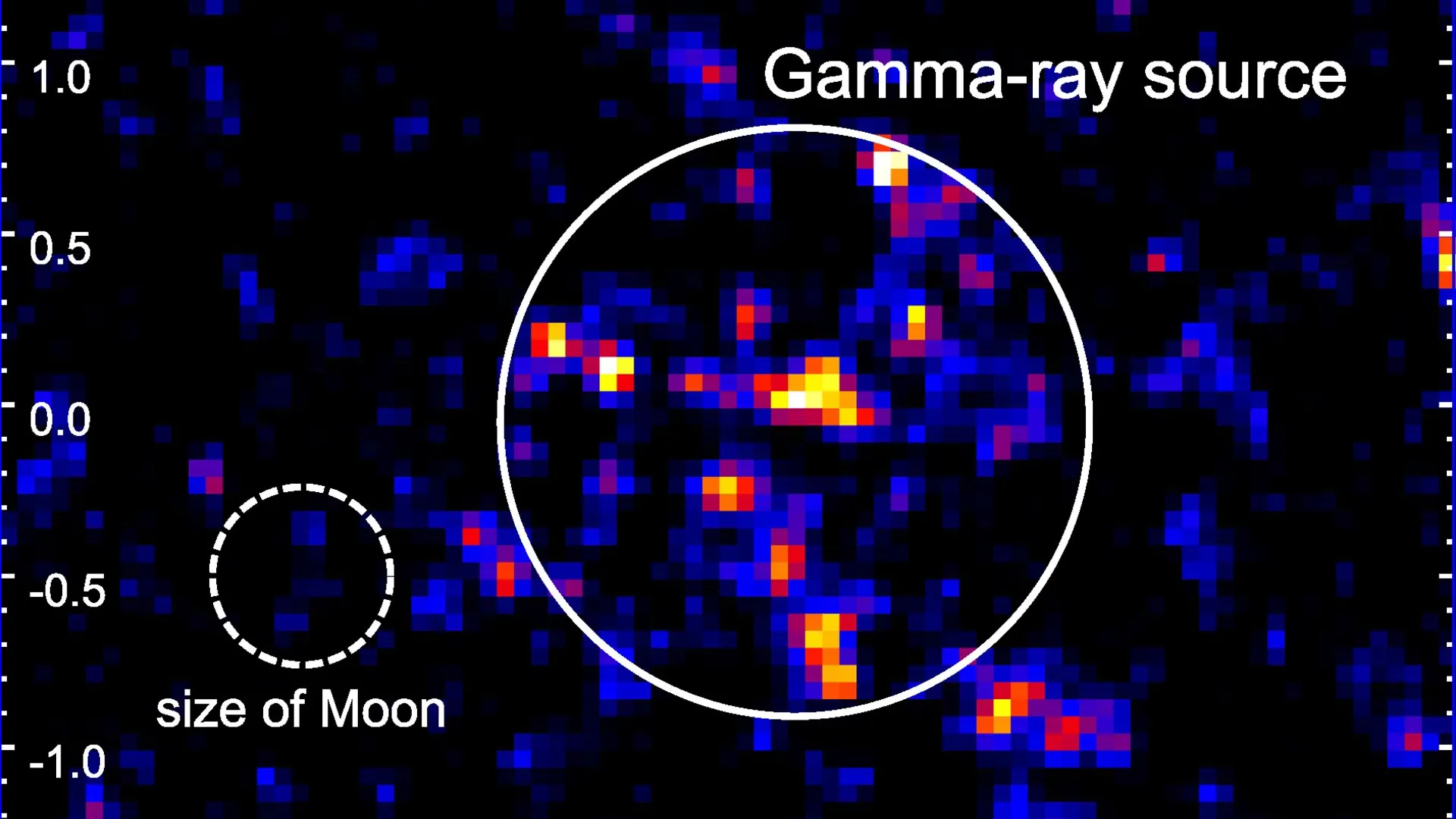
There’s a ghost in the Milky Way’s machine, and its name is LHAASO J1912+1014u. This isn't just another bright spot in the sky—it's a cosmic accelerator hurling protons past one quadrillion electron volts. That’s not a number; it’s a threat to our understanding of how the galaxy works. We’ve found the engine, but we still don’t know who’s driving.
This matters because cosmic rays aren’t just pretty light shows. They shape the interstellar medium, influence star formation, and carry the fingerprints of the most violent physics in the universe. For decades, we’ve hunted for the Milky Way’s "PeVatrons"—sources capable of pushing particles to these extremes. LHAASO J1912+1014u is a prime suspect, and its discovery tightens the noose around the mystery of where our galaxy’s most energetic radiation is born.
What does this signal? That the Milky Way is far more restless than we give it credit for. It connects to a broader story: the invisible scaffolding of the cosmos, from dark matter’s gravitational grip to the particle storms that sculpt galaxies. Every new accelerator we find is a reminder that the universe’s extremes are not in distant quasars alone—they’re hiding in our own backyard.
We’ve found a proton slingshot. Now we have to find the hand that pulls the trigger. The next chapter of this story won’t be written in the lab—it’ll be decoded from the sky.