Total solar eclipse Aug. 12, 2026 live updates — 3 days to totality
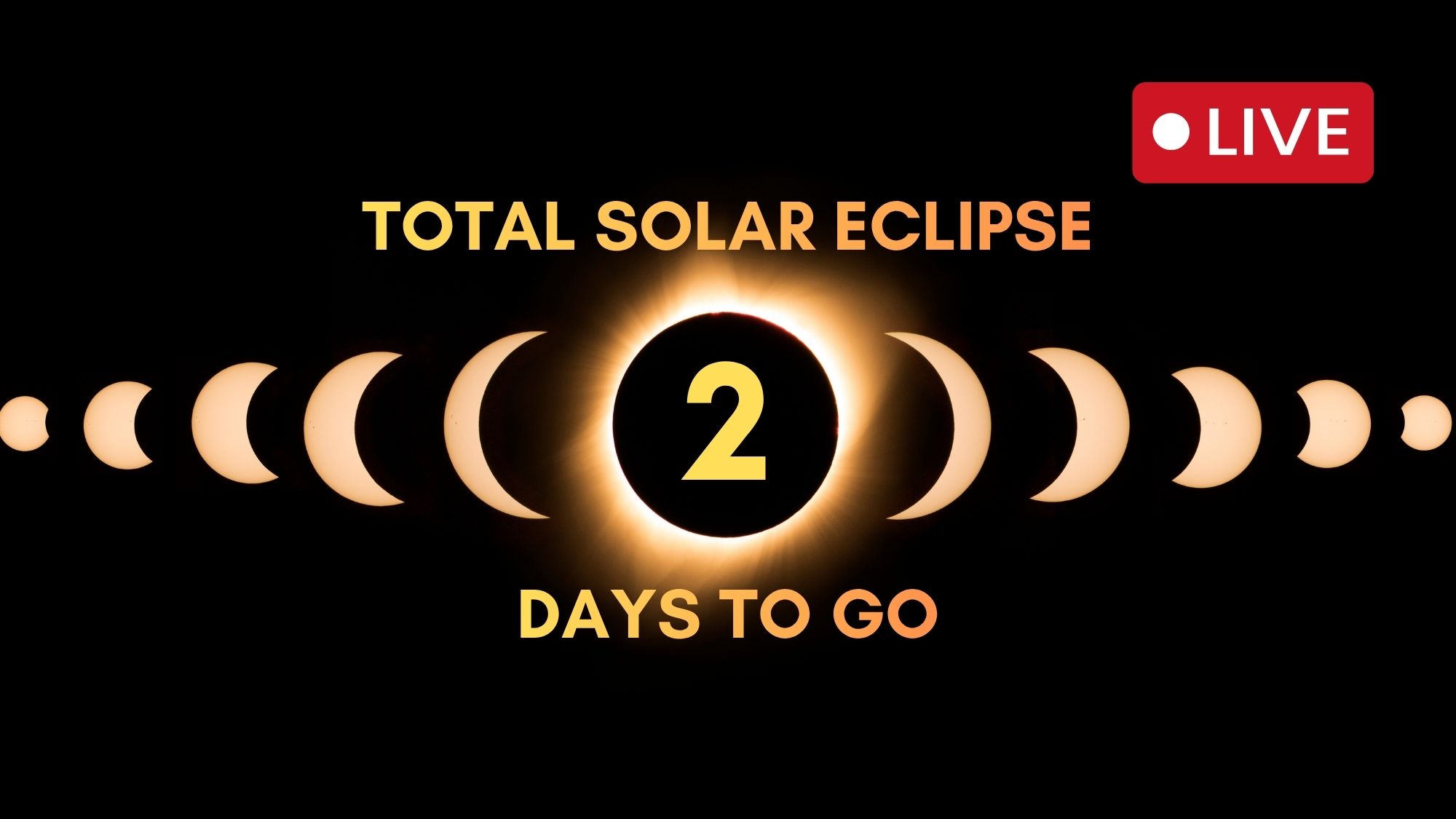
There's something almost primal about a total solar eclipse. For all our scientific understanding—the precise orbital mechanics, the predictable Saros cycles—the moment the Moon fully occludes the Sun still hits like a gut punch of wonder. The live coverage from Space.com, counting down to August 12, 2026, isn't just a news feed; it's a chronicle of human anticipation. We know exactly when and where the shadow will fall, yet every eclipse feels like a first-time miracle, as if the cosmos is winking at us.
This particular eclipse is special because it crosses Greenland and Spain—two very different landscapes, from icy fjords to Mediterranean plains. The path of totality is a narrow ribbon, often just a hundred miles wide, and chasing it is a pilgrimage. Thousands will travel, armed with eclipse glasses and cameras, to stand in the Moon's umbral shadow for a few precious minutes. The live updates promise expert insight, but the real story is the shared human experience: strangers looking up together, gasping as the corona blooms, feeling the temperature drop and the birds fall silent.
From a scientific perspective, eclipses are still invaluable. They allow us to study the Sun's corona—the superheated outer atmosphere—in detail that's hard to achieve with artificial coronagraphs. They also offer a natural experiment in animal behavior and atmospheric physics. But the deeper resonance is philosophical. An eclipse is a stark reminder that our existence is contingent on a fragile alignment of celestial bodies. The Moon, drifting away from us at about 3.8 centimeters per year, won't always be able to perfectly cover the Sun. In a few hundred million years, total solar eclipses will be a thing of the past. So this event is not just a spectacle; it's a fleeting cosmic privilege.
The live blog format itself is a testament to our modern relationship with the cosmos. We don't just watch—we document, share, and collectively narrate the experience in real time. Space.com's coverage is a digital campfire around which the global community gathers, sharing the countdown and the wonder. As the clock ticks toward totality, we're not just waiting for an astronomical event; we're participating in a shared ritual that connects us to every human who ever looked up in awe.