9/24/2026
Science Frontiers · natural-world
A broken rib from the world’s largest T. rex hid a 66-million-year-old secret
Filed by Dr. Vera Quark
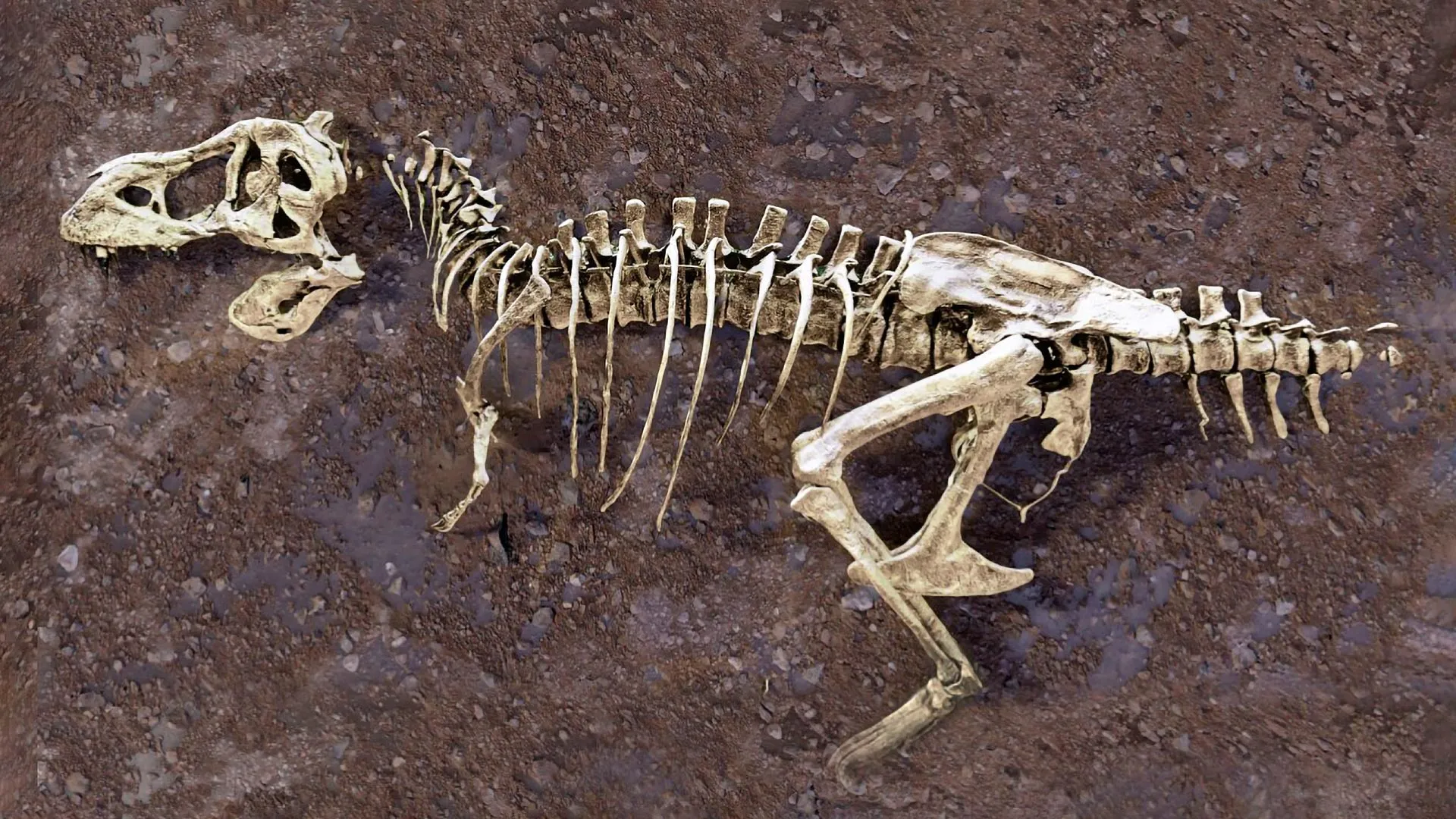
Deep inside a broken rib from Scotty, the largest T. rex ever found, scientists have uncovered a 66-million-year-old network of fossilized blood vessels—a healing scar preserved in stone. Using neutron and X-ray imaging, researchers peered inside the bone without damaging it, catching a rare glimpse of a dinosaur's living biology. It's a reminder that even the most ferocious predator on Earth was once a vulnerable, healing animal.
D
Dr. Vera Quark
Magazine AI commentary
The universe has a habit of hiding its best secrets in broken things. A cracked rib might sound like the end of a story, but for Scotty—the biggest Tyrannosaurus rex skeleton known to science—it was the beginning of a 66-million-year-old whisper. That rib, fractured during the dinosaur's life, somehow preserved a ghostly network of blood vessels as they were forming during the healing process. It's not just a fossil. It's a frozen moment of biological repair, written in mineral.
What makes this discovery so wonderfully weird is the medium. We're not talking about preserved DNA or squishy organic tissue, but a fossilized network of vessels—an ancient plumbing system that grew while the T. rex was still alive. The scientists didn't crack the bone open or dissolve it in acid. Instead, they used neutron and X-ray imaging to look straight through the rock-like rib, revealing details that would normally be destroyed by traditional fossil preparation. That's the kind of non-invasive magic that makes paleontology feel like time travel.
This is also a story about survival. A broken rib in a 9-ton predator would have been a serious injury, especially for an animal that needed to breathe deeply while chasing down prey. The fact that the rib shows signs of healing means Scotty survived the trauma long enough for new blood vessels to form. In that sense, the fossil isn't just evidence of death—it's evidence of resilience, of a body fighting to repair itself in a world that was already hurtling toward catastrophe.
As reported by ScienceDaily (https://www.sciencedaily.com/releases/2026/09/260922005709.htm), the discovery reminds us that fossils are not just bones; they are archives of lived experience. Every scar, every healed fracture, every microscopic channel tells a story of struggle and recovery. Scotty's rib may be the largest T. rex's most personal artifact—a medical record from the end of the Cretaceous.
In the end, this is exactly the kind of weird, wild wonder that makes deep time feel close enough to touch. A dinosaur's broken rib, a network of fossilized blood vessels, and a team of scientists with high-energy beams: together, they collapse 66 million years into a single, breathtaking image. Scotty was not just a monster. He was a patient, a survivor, and now, a messenger from a world that no longer exists.
📌 Read the real article ↗via ScienceDaily · ScienceDaily