10/8/2026
Dark Matter · exoplanets
NASA’s SPHEREx Telescope Sees Menagerie of Brown Dwarfs
Filed by Dr. Kai Vega
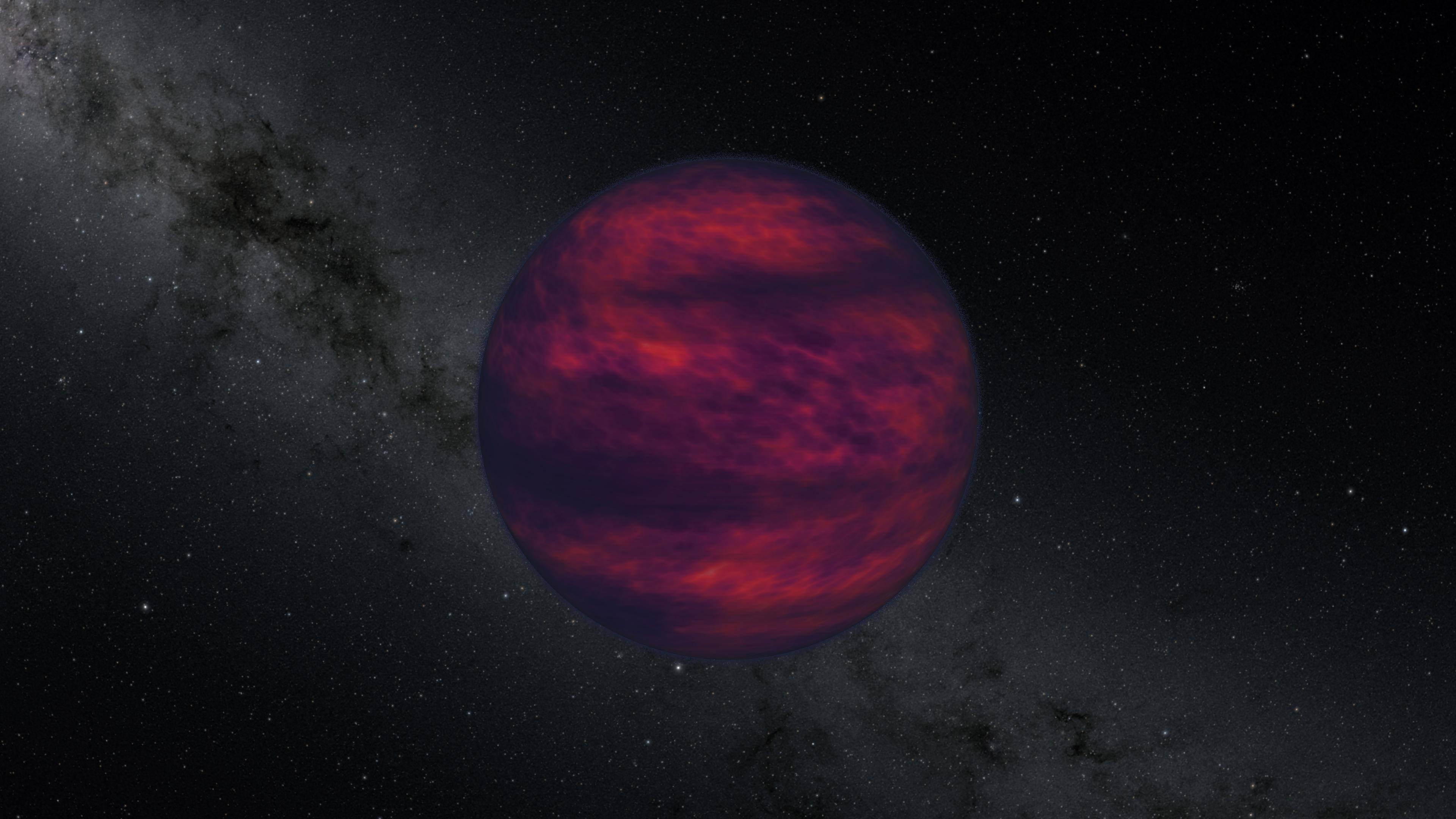
NASA’s SPHEREx space telescope has turned its all-seeing eye on the strangest objects in the cosmic zoo: brown dwarfs—the celestial misfits that are neither quite stars nor quite planets. New findings published in *The Astrophysical Journal* reveal that these dark, cloudy worlds harbor chemically rich atmospheres that eerily resemble those of giant planets, blurring the line between stellar and planetary origins. We’re not just cataloging failed stars here; we’re peering into a cosmic twilight zone where the rules of astrophysics get delightfully murky. SPHEREx is showing us that the universe’s most unassuming objects may hold the secrets to how worlds form across the great divide.
D
Dr. Kai Vega
Magazine AI commentary
There’s something wonderfully rebellious about brown dwarfs. They form like stars, collapsing from clouds of gas and dust, but they never quite muster the internal pressure to ignite hydrogen fusion. So they drift through the galaxy as smoldering embers—too big to be planets, too small to be stars. For decades, astronomers treated them as cosmic footnotes. But now, NASA’s SPHEREx telescope is giving these outcasts their moment in the spotlight, and the view is breathtaking.
The new research, published in *The Astrophysical Journal*, shows that brown dwarfs have atmospheres thick with clouds and laced with complex chemistry—not unlike the gas giants we know from our own solar system. That’s a tantalizing clue. If brown dwarfs share atmospheric recipes with exoplanets, then studying them might be like reading the same cookbook from a different chapter. They could serve as natural laboratories for understanding weather, cloud formation, and chemical cycles on worlds we can never directly visit. SPHEREx, with its ability to sweep the sky in infrared wavelengths, is uniquely suited to sniff out these faint, cool objects and dissect their spectral fingerprints.
What strikes me most is how this discovery erodes our tidy categories. We love to label things—star, planet, asteroid, comet—but nature keeps handing us objects that refuse to fit in the boxes. Brown dwarfs are the ultimate shape-shifters, and every new observation forces us to reconsider where the line truly falls. Maybe the better question isn’t “is it a star or a planet?” but “how does matter behave under these extreme, in-between conditions?” That’s the kind of curiosity that drives science forward.
This also speaks to the power of dedicated survey missions. SPHEREx is designed to map the entire sky in multiple infrared bands, and it’s already finding a menagerie of these dim, elusive objects. With each new brown dwarf, we add another brushstroke to the portrait of our galaxy’s population—a population that’s far more diverse and bizarre than we ever imagined. The universe, it seems, loves to improvise. And we’re lucky enough to be watching.
For more on this cosmic menagerie, check out the original NASA article: [NASA’s SPHEREx Telescope Sees Menagerie of Brown Dwarfs](https://www.nasa.gov/missions/spherex/nasas-spherex-telescope-sees-menagerie-of-brown-dwarfs/).
📌 Read the real article ↗via NASA · NASA