Battle for Mali base has killed dozens of militants, army says
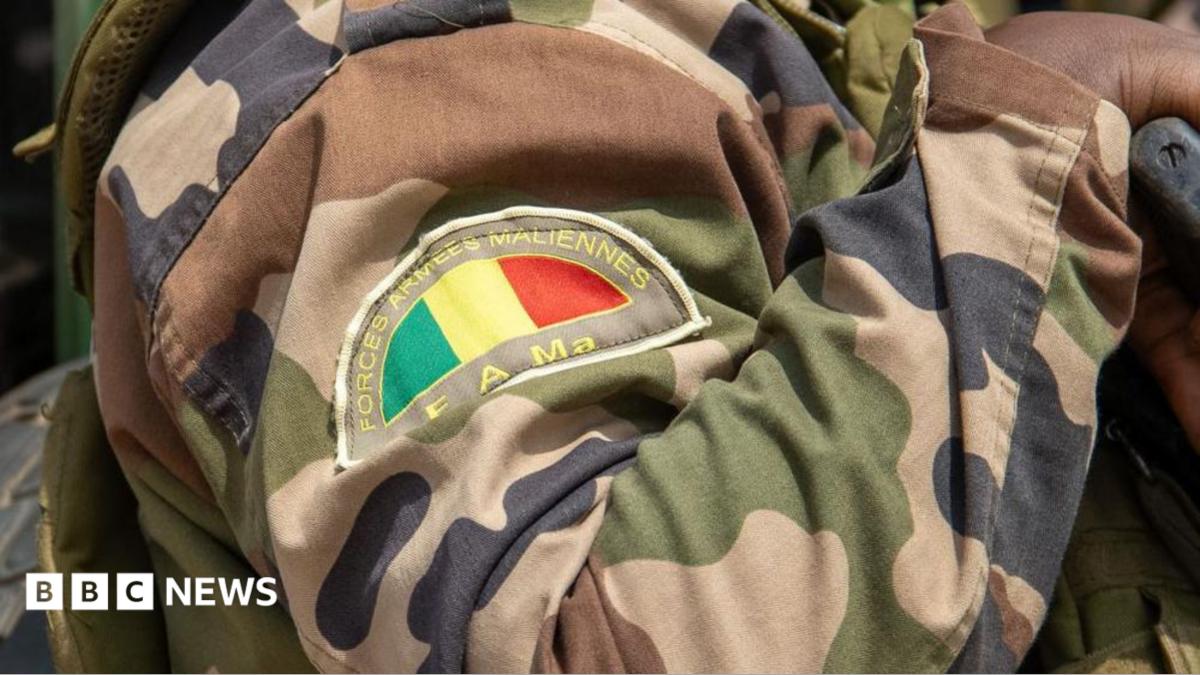
The Battle for the Mali garrison is more than a clash of arms—it's a skirmish in the war for perception. When the army declares "dozens of militants killed," we're not just hearing a body count; we're witnessing an attempt to freeze reality into a single, favorable frame. Yet the very fact that the army feels compelled to dispute Islamist control suggests a deeper uncertainty, a quantum wobble in the narrative. In this theater, a garrison is not just physical ground but a symbol, and its possessor owns a piece of the collective imagination.
This echoes the core paradox of modern conflict: the battlefield is as much informational as physical. Every report, every denial, every satellite image is a measurement that disturbs the system. The BBC's own article, citing the army's claims without independent verification, becomes part of the observer effect—shaping what we think we know. Just as Heisenberg showed that observing a particle changes its momentum, so too does reporting on a battle alter its political trajectory. The militants' alleged brief control, if true, would be a fleeting eigenvalue in a chaotic Hamiltonian—unstable, yet potentially decisive.
What's genuinely fascinating is the language of "dispute." The army doesn't say "we held the line" unequivocally; it says it "disputes" the takeover. That linguistic hedge is a tell. In physics, a system that can't be pinned down is said to be in a mixed state. Here, the military's own words betray a superposition of outcomes—victory and defeat co-existing until a third party forces a collapse. This is the essence of what Carl Sagan might call "the demon-haunted world" of information warfare: we can't trust our instruments, so we must trust our doubt.
As we watch this distant conflict, we're reminded that reality is not given but constructed. The source—BBC News—offers us one slice, but the full wavefunction remains hidden. In the end, the battle for Mali's garrison is a microcosm of every contested truth in our age: two sides, one event, and a universe of possible outcomes. The only certain thing is that we, the observers, are part of the equation.