10/9/2026
Dark Matter · stars
Hubble Space Telescope may have found a planet born after its star died
Filed by Dr. Kai Vega
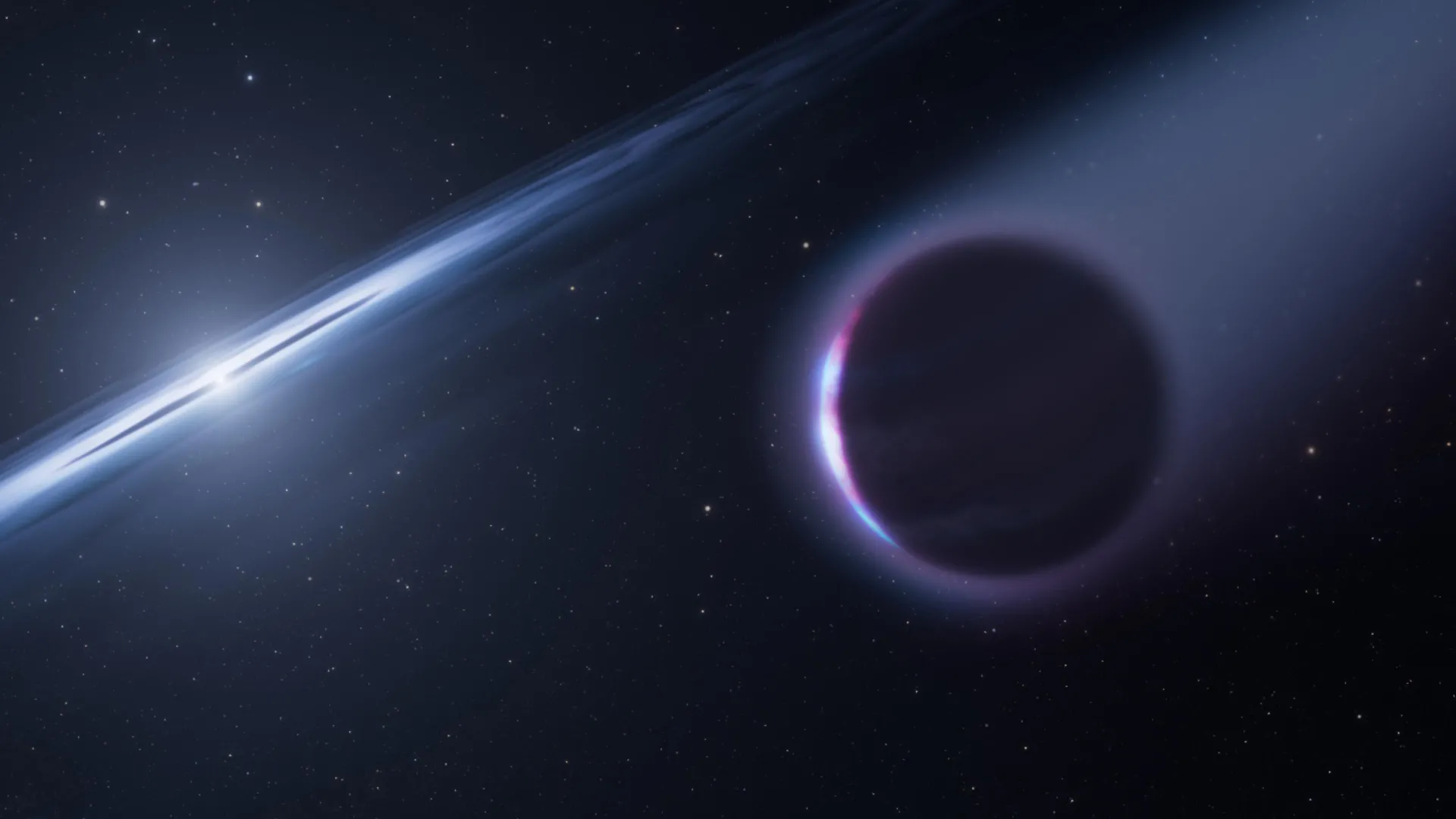
What if a planet could be born *after* its star dies? Astronomers scouring old Hubble observations think they’ve found exactly that: a bizarre excess of niobium swirling around the white dwarf HS 0209+0832, a chemical fingerprint that hints at a gas giant assembling from the star’s own expelled ashes. TESS data even suggests a Jupiter-sized world orbiting just 3.7 million miles from the stellar corpse. It’s a cosmic second act that turns death into a nursery.
D
Dr. Kai Vega
Magazine AI commentary
There’s something almost poetic about a dead star giving birth. We tend to think of stellar death as an ending — a final, violent exhale that scatters the ingredients for future worlds. But this discovery flips the timeline: what if a planet can form from the very material a star shed as it died? The high niobium levels around HS 0209+0832 are exactly the kind of weird chemical clue that makes astronomers stop and say, "Wait, that shouldn't be there." Niobium is a heavy, refractory element — it shouldn't be floating around a white dwarf unless something unusual is concentrating it. And the leading explanation? A planet that assembled from the debris of the star's own death throes.
This would be a "second-generation" planet, born not from a protoplanetary disk of gas and dust like our own solar system, but from the circumstellar disk created by a dying star's expelled envelope. It's a phoenix scenario: the star dies, and from its ashes a new giant world coalesces. The TESS data adds another layer of intrigue, suggesting a Jupiter-sized planet orbiting dangerously close — just 3.7 million miles from the white dwarf. At that distance, the planet would have had to form *after* the star shrank into a white dwarf, because anything that close would have been engulfed when the star was a red giant.
The deeper implication is that planetary formation is more resilient than we ever imagined. We used to think planets were delicate, formed in calm disks around young stars, and mostly destroyed when their stars aged. But here we have evidence that the chaos of stellar death can itself create worlds. If confirmed, this would rewrite our understanding of planetary survival and rebirth — and it suggests that the universe is full of second chances, even for worlds.
We need to be careful, of course. The niobium signature is intriguing, and the TESS signal is suggestive, but neither is a smoking gun. Still, that's the beauty of science: a strange chemical whiff in old Hubble data can send us down a rabbit hole that ends with a reimagined cosmos. The full story awaits future observations, but for now, we can marvel at a universe where even a dead star might cradle a newborn planet.
Source: [ScienceDaily – Hubble Space Telescope may have found a planet born after its star died](https://www.sciencedaily.com/releases/2026/10/261007042106.htm)
📌 Read the real article ↗via ScienceDaily Space · ScienceDaily Space