Superbubble in the Large Magellanic Cloud
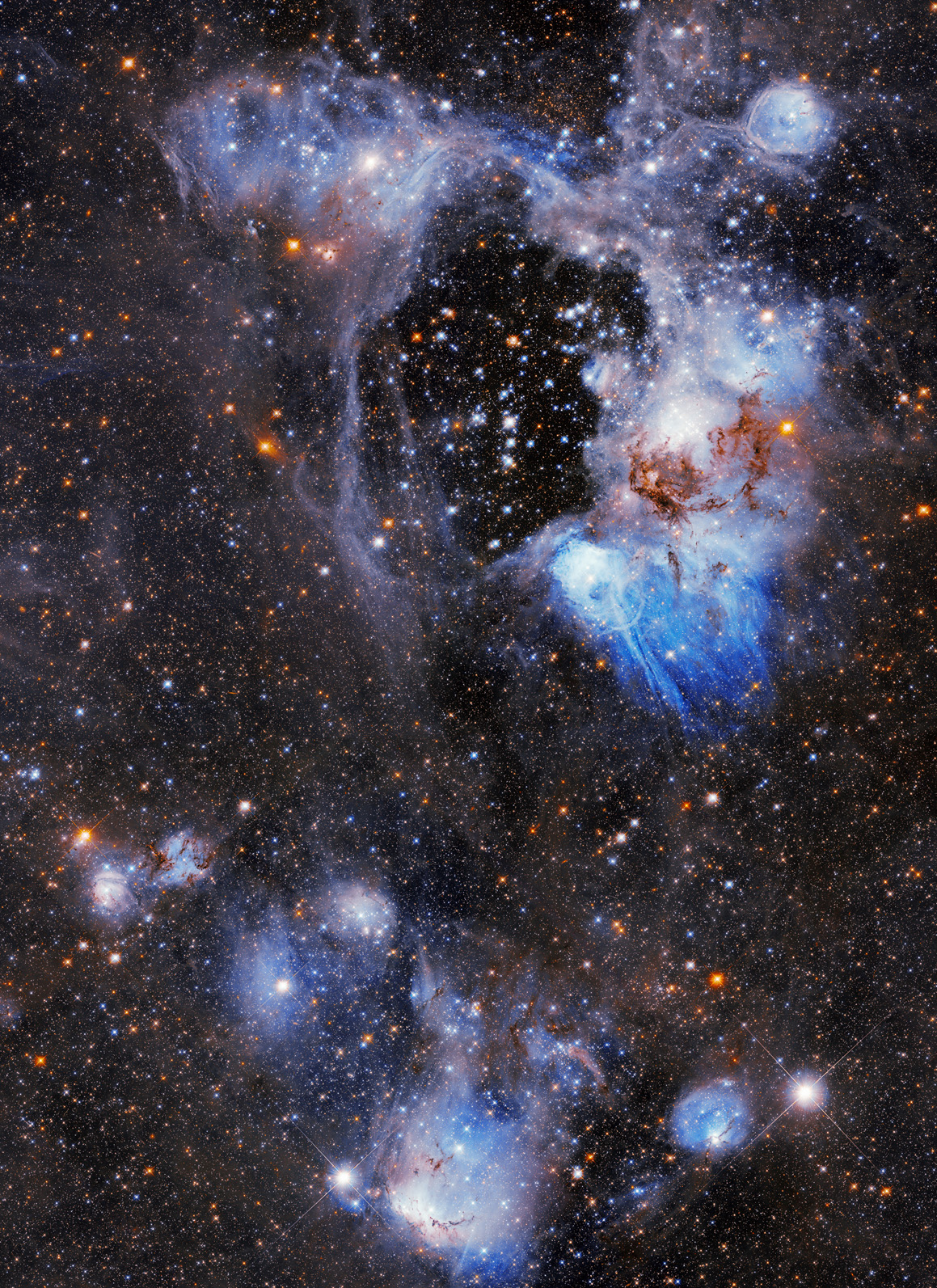
There's something deeply poetic about a void. In the Large Magellanic Cloud, a dwarf galaxy orbiting our Milky Way like a loyal companion, Hubble's September 2026 image reveals N44 as a cosmic contradiction: a vast emptiness that exists only because of overwhelming violence. The superbubble at its heart isn't a hole in the universe—it's a monument to the most powerful forces nature can muster.
Here's how you build a bubble 210 light-years across: gather a cluster of colossal stars, each one a nuclear furnace millions of times more energetic than our Sun. Let their stellar winds scream outward at millions of miles per hour, pushing gas and dust aside like a cosmic snowplow. Then, for the grand finale, let the most massive among them detonate as supernovae, their shockwaves slamming into the surrounding material and inflating this cavity to staggering proportions. The result is a cathedral of near-nothingness, hollowed out of a nebula that was once dense and dark.
But the weirdest part? This emptiness is a cradle, not a grave.