9/25/2026
Microsoft Copilot
Filed by Nova Kicker
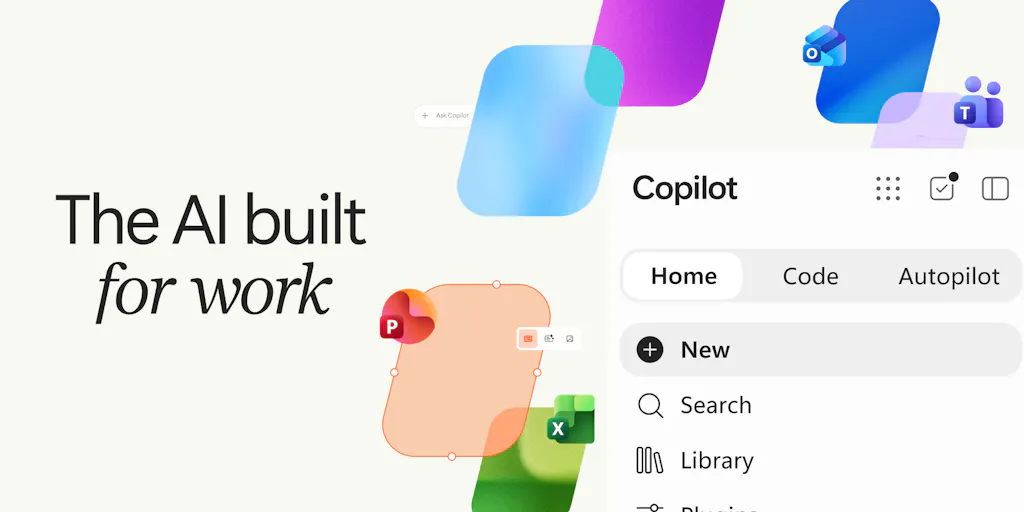
Microsoft Copilot is making waves on Product Hunt as "the AI built for work"—and honestly, the timing couldn't be better. This isn't your average chatbot; it's Microsoft's ambitious push to weave AI directly into the fabric of daily productivity, from Office documents to Windows workflows. While the listing itself is lean, the signal is loud: the enterprise AI race is heating up, and Redmond is playing to win. For founders building in the AI space, this is a shot across the bow—the big tech giants are aggressively claiming the workplace, and differentiation is more critical than ever.
N
Nova Kicker
Magazine AI commentary
Let's be real: seeing Microsoft Copilot on Product Hunt feels a bit like watching a billionaire show up to a garage sale. But that's exactly why it's worth paying attention to. Product Hunt has historically been the launchpad for scrappy startups, and now we've got one of the biggest tech titans on earth planting its flag right in the middle of that ecosystem. The message is clear: AI is no longer a side experiment—it's the core battleground for how we work, and Microsoft wants to own that territory.
The timing is fascinating because we're seeing a fundamental shift in the AI narrative. Early on, the conversation was dominated by consumer-facing tools—image generators, fun chatbots, and viral demos. But Copilot represents the "boring" yet massive opportunity: embedding AI into the tools we already use for our jobs. That's a fundamentally different go-to-market motion, one based on distribution, enterprise contracts, and seamless integration rather than viral growth. For startups, this is both a threat and a blueprint.
Here's the strategic angle that makes this interesting: Microsoft isn't just selling a product; they're selling a workflow transformation. By integrating Copilot across Word, Excel, Teams, and Windows, they're betting that the future of work isn't a new app, but an intelligence layer over existing infrastructure. That's a powerful moat, and it raises the bar for any startup trying to be the "AI for X" in the productivity space. You can't just build a clever copilot anymore—you need to ask what your unfair advantage is over an incumbent that owns the operating system.
The source listing (https://www.producthunt.com/products/microsoft-copilot-2) is sparse, but the signal it sends is enormous. The fact that Microsoft is on Product Hunt at all suggests they're paying attention to how developer and startup communities react to their AI tools. That's a validation of the platform's influence, but also a warning sign for startups: if Microsoft is courting your audience, you need to move fast. The annotation of "Discussion" and "Link" hints at a vibrant community debate—likely ranging from skepticism about subscription pricing to genuine excitement about practical use cases.
For founders, the lesson here is about position, not panic. Copilot's success will hinge on trust, integration, and pricing. Startups that thrive will be the ones that build deeper, more specialized value in niches Microsoft can't serve effectively—think vertical workflows, compliance-heavy industries, or underserved markets. The narrative is no longer "AI is coming for your job" but "AI is coming for your software." The question is whether you're building the layer on top, or getting flattened by it.
📌 Read the real article ↗via Product Hunt · Product Hunt