SpaceX launches 24 Starlink satellites to orbit from California
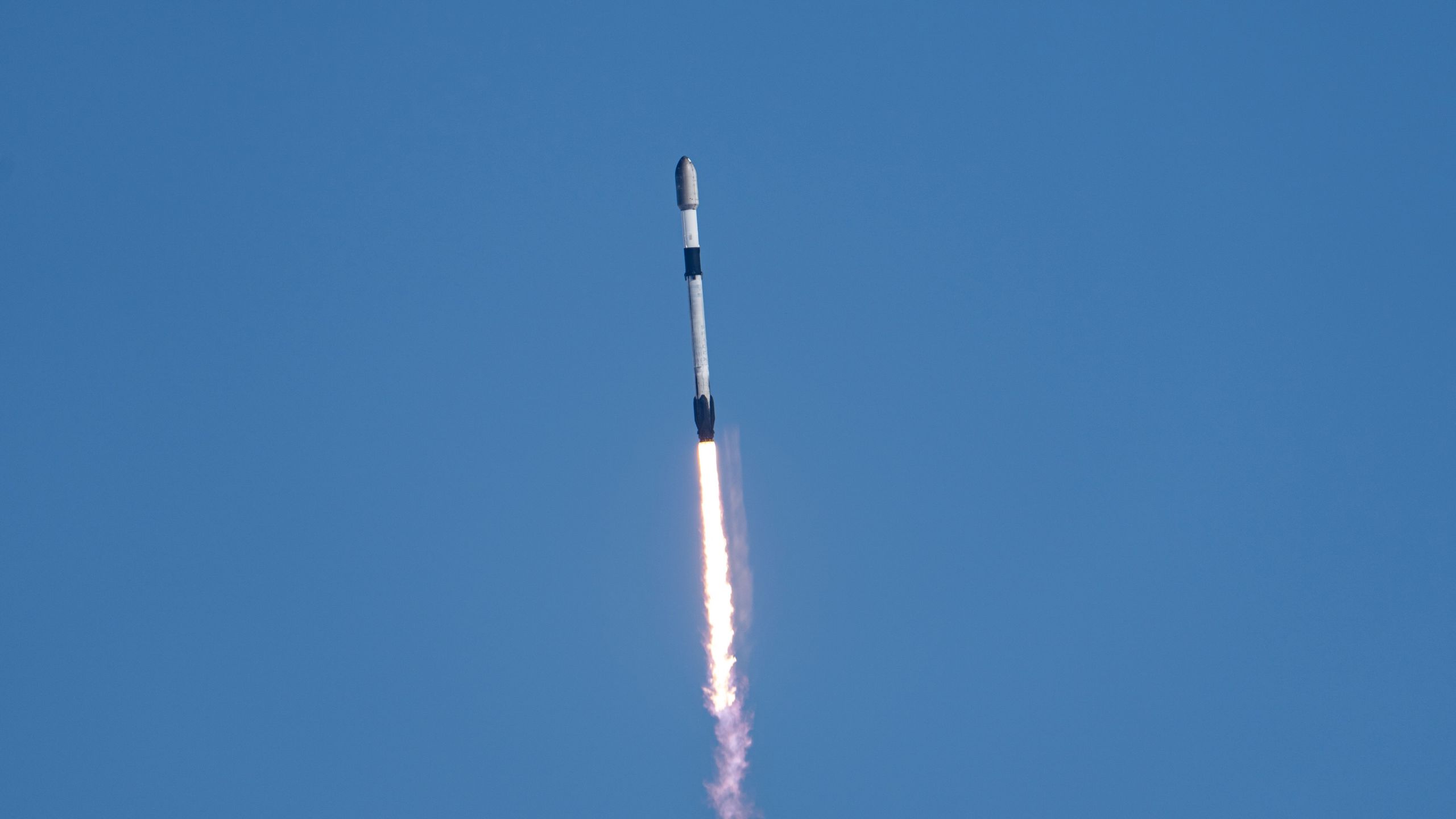
There's a strange poetry in the fact that the most profound transformations of our species often arrive as mundane logistics. A Falcon 9 lifts off from Vandenberg Space Force Base, and we watch the livestream with the same casual attention we'd give a weather update. Yet each of those 24 satellites is a tiny node in a mesh of light—a technological nervous system wrapping the Earth in a digital epidermis. We're not just launching hardware; we're launching the infrastructure of a planetary mind, one that will eventually connect every village, every ship, every drone, every self-driving car to a single, seamless stream of information.
The weirdness deepens when you consider the orbital mechanics. These satellites aren't parked in some celestial parking lot—they're moving at 17,000 mph, in a delicate dance choreographed by gravity and software. Every launch nudges the constellation, requiring constant orbital adjustments to avoid collisions. We're building a machine that must self-correct in real time, a kind of artificial organism with thousands of moving parts, all coordinated by algorithms that no single human fully understands. It's a living artifact, a testament to our ability to create systems that exceed our own cognitive grasp.
But there's a darker edge to this web. As Starlink and its competitors fill the sky, astronomers are already complaining about light pollution—streaks of reflected sunlight ruining deep-space observations. We're trading our view of the cosmos for a faster internet connection. Is that a fair exchange? Perhaps the most cosmic irony is that these satellites, built to connect us, are simultaneously blinding our telescopes to the very universe we're trying to understand. It's a story of hubris and wonder, of progress and its shadow.
And yet, I can't help but feel a childlike awe. Every launch is a reminder that we are a species that refuses to stay put. We've turned our planet into a launching pad for a thousand tiny moons, each one a message in a bottle to the future. The source article captures just another Tuesday in the space age, but it's actually a chapter in an epic that will be read by whatever comes after us. We are building a halo of human intention around our world—and that's both the strangest and most beautiful thing we do.