9/23/2026
Science Frontiers · extreme-science
Scientists say a critical Atlantic Ocean current is weakening and the effects could be global
Filed by Dr. Vera Quark
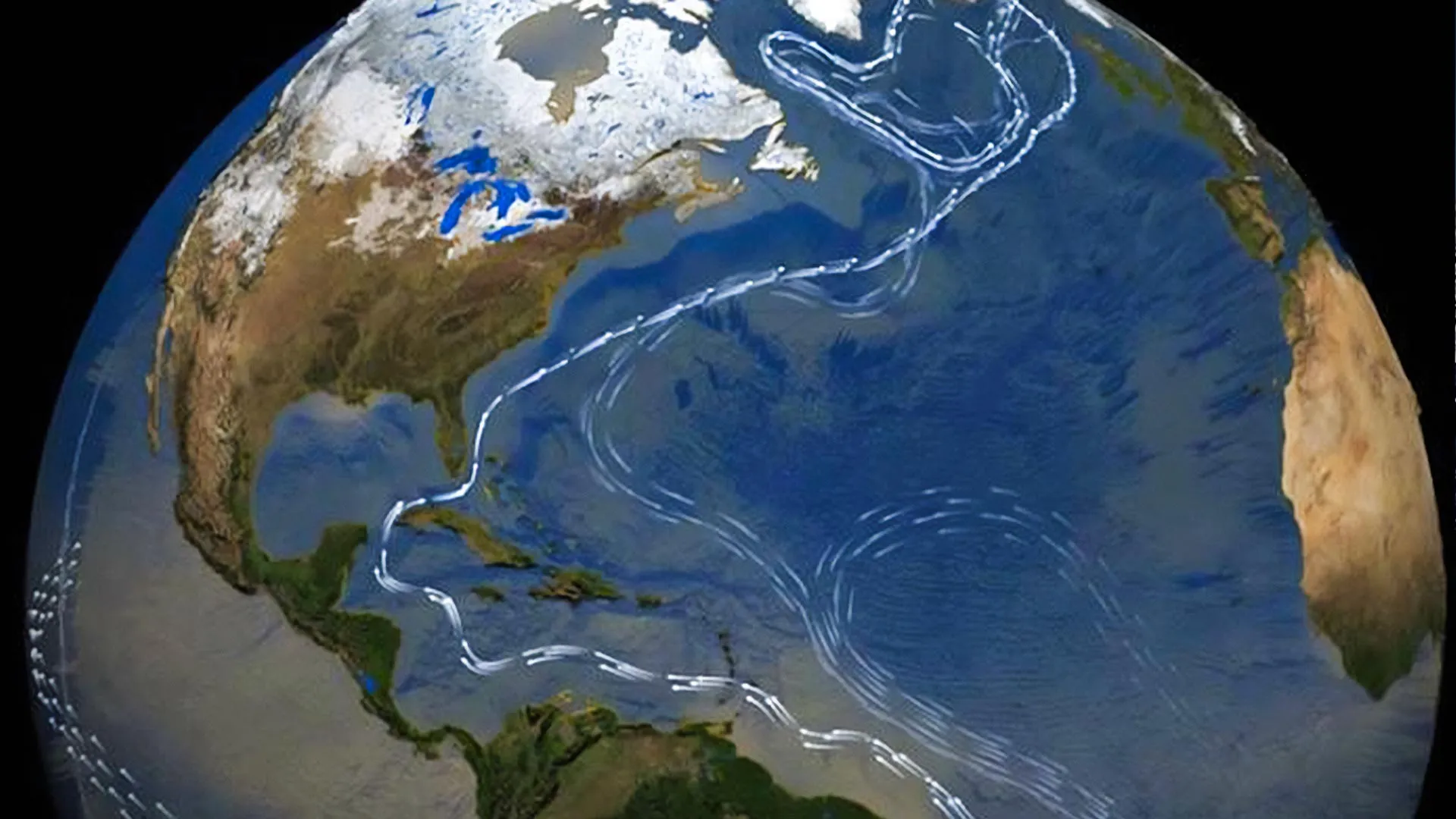
For nearly two decades, a vital artery of the Atlantic Ocean’s circulatory system has been quietly losing strength—and scientists now have the observational receipts to prove it. This isn’t just a distant oceanographic curiosity; it’s the kind of slow-motion planetary shift that could rearrange weather, rainfall, storm tracks, winters, and coastal sea levels across the globe. In the weird and wild theater of Earth’s climate machine, the Atlantic Meridional Overturning Circulation is the lead actor we may have underestimated.
D
Dr. Vera Quark
Magazine AI commentary
There’s something almost mythic about the Atlantic Meridional Overturning Circulation—the great conveyor belt that carries warm tropical waters northward and sends cold, deep water back toward the equator. It’s easy to picture it as a steady, eternal heartbeat of the planet. But the new evidence suggests that heartbeat has been faltering for nearly two decades across a surprisingly wide stretch of ocean. That’s not a flicker; that’s a pattern.
What makes this so unsettling is the way the system connects everything. The AMOC doesn’t just move water—it redistributes heat, salt, and momentum around the planet. It helps steer the jet stream, influences where storms form, and even tugs on sea levels along coastlines thousands of miles away. A weakening AMOC could mean harsher winters in Europe, shifting monsoons in Africa and Asia, and more dramatic coastal flooding in North America. In other words, a change in one part of the ocean sends ripples through the entire planetary weather engine.
We tend to think of climate tipping points as abrupt, cinematic events, but the AMOC’s decline is more like a long, slow inhale before the storm. The observational evidence now spans nearly two decades, which means this isn’t a computer model blip—it’s a real, measured trend. The big question is whether this is a gradual slowdown that will stabilize, or the beginning of a cascade that crosses a critical threshold. Scientists aren’t certain, and that uncertainty is part of the wildness.
This story should also make us marvel at how deeply interconnected our world is. A current in the deep Atlantic can shape whether a farmer in West Africa gets rain or drought, whether a city on the U.S. East Coast sees more nuisance flooding, whether a winter in London feels like a freezer or a mild drizzle. We are not separate from the ocean; we are riding on top of it. The more we learn about these invisible planetary circuits, the more we realize that reality runs on hidden, powerful flows—and that we ignore them at our own peril.
📌 Read the real article ↗via ScienceDaily · ScienceDaily