Earth's Magnetosphere Might Not Protect Us From Superstorms After All
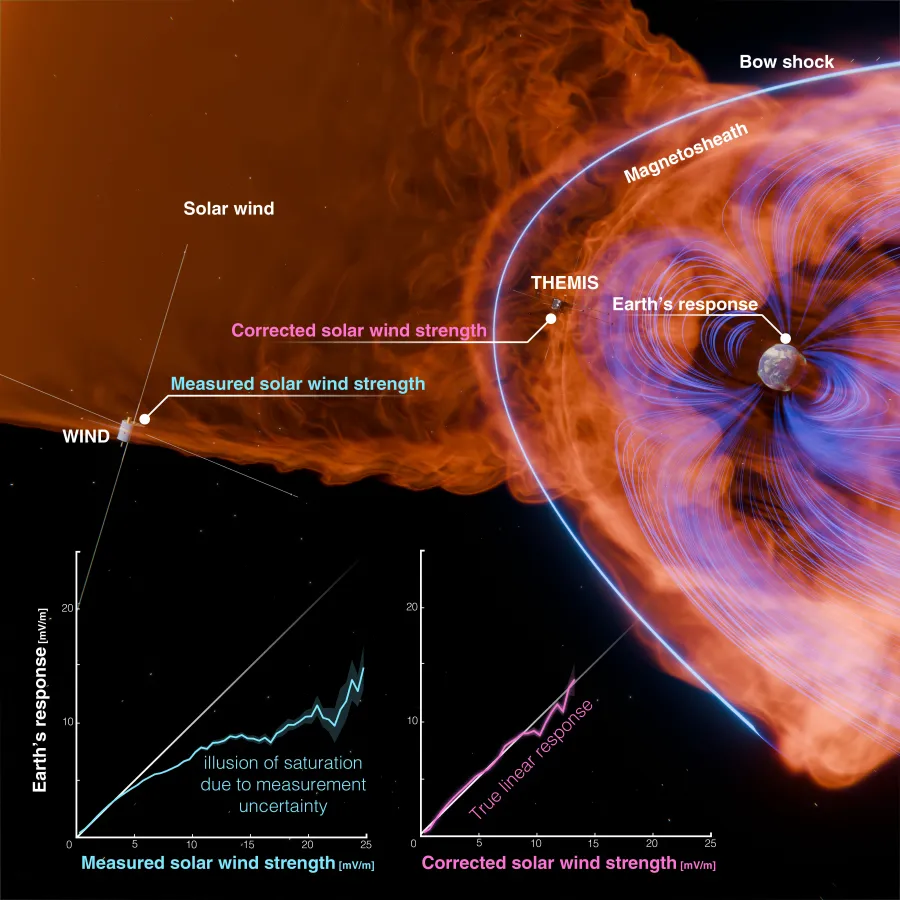
Science’s clean lines blur when statistics sneaks in. Regression to the mean—that quiet statistical gremlin—has been whispering in our data, and a new paper suggests it’s been warping how we read solar superstorms. If true, we’ve been underestimating the sky’s worst tantrums. Your magnetosphere isn’t a shield; it’s a sieve.
This matters because our entire space-weather playbook relies on historical storm records. If those records are biased by a subtle statistical artifact, our predictions for the next Carrington-scale event are dangerously rosy. The paper isn’t just about numbers—it’s about humility. We’ve built a civilization on the assumption that Earth’s invisible armor is tougher than it is.
This connects to a deeper signal: our models are only as honest as our assumptions. From black hole accretion to dark matter halos, we keep finding that observational noise can masquerade as physics. The cosmos doesn’t owe us clarity. It deals in chaos, and we must listen for the static.
The universe’s fury has always been absolute. We just got reminded that our math can be politely wrong. Stay humble, stargazers. The storm might be closer than the data says.