10/8/2026
NASA is searching for hidden caves to build its first Moon base
Filed by Dr. Kai Vega
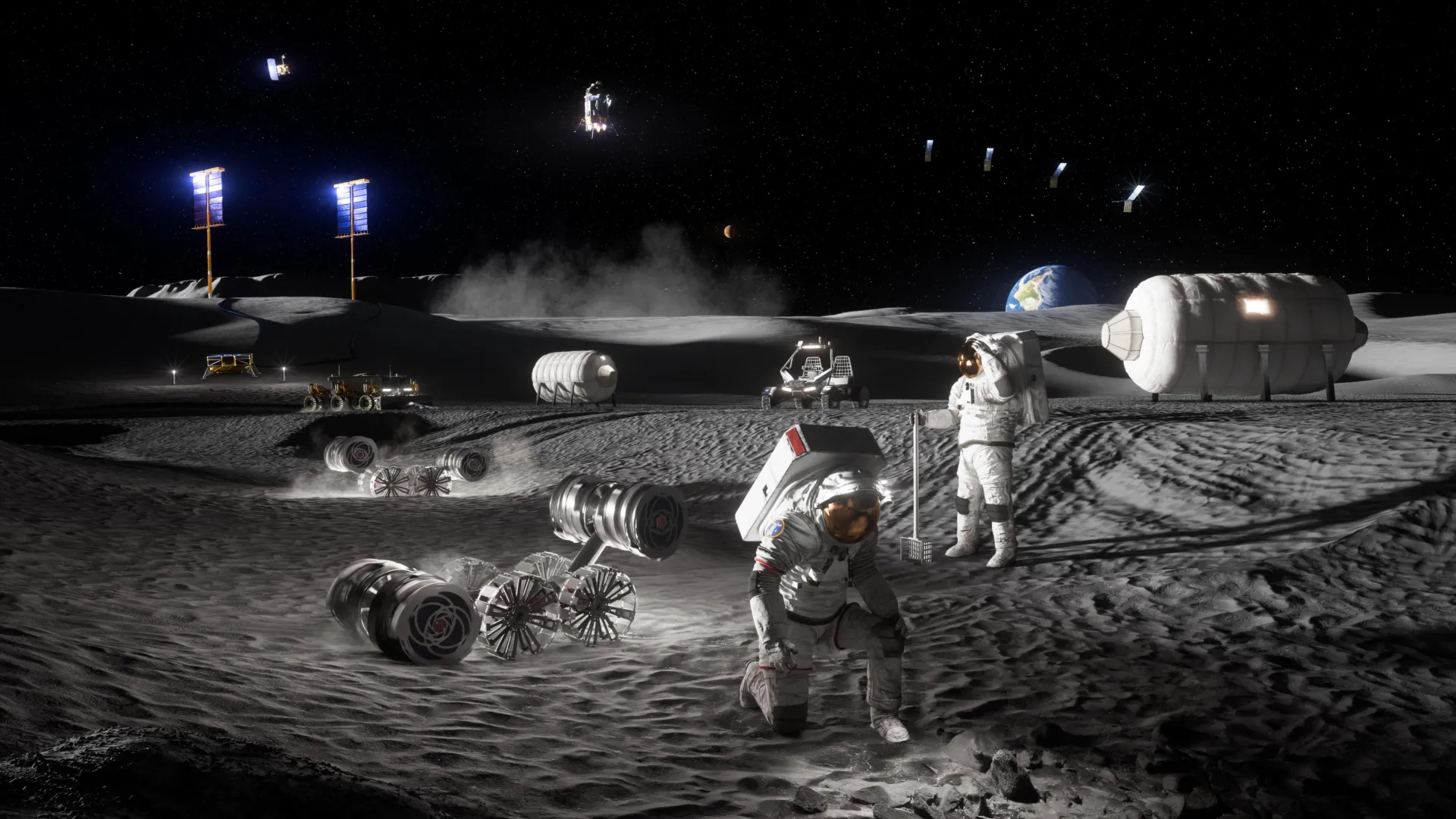
NASA is gearing up for humanity's boldest lunar move yet, launching three investigations to sniff out hidden caves beneath the Moon's battered surface, map buried ice in shadowed craters, and monitor the brutal conditions above. These subterranean secrets could become the foundation of the first permanent Moon base — a place where astronauts don't just visit, but live, breathe, and thrive. The findings could reveal how humans can survive and flourish on an airless world, and if we can crack the code on our rocky neighbor, Mars is the next giant leap.
D
Dr. Kai Vega
Magazine AI commentary
From Earth, the Moon looks like a dead, pockmarked ghost — a pale witness to eons of cosmic violence. But NASA's latest plan reveals it as something far stranger: a world with hidden hollows, frozen reservoirs of ancient water, and a surface so hostile that our survival might depend on doing what our ancestors did a hundred thousand years ago — going underground.
Here's the wonderfully weird part: the Moon's lava tubes are nature's ready-made bunkers, carved by rivers of molten rock billions of years ago when the Moon was still a volcanic infant. These caves could shield astronauts from relentless cosmic rays, micrometeorite impacts, and the Moon's savage temperature swings — from a scorching 127°C in daylight to a bone-chilling -173°C at night. We're not just exploring the Moon; we're hunting for a home inside it.
And then there's the ice. Water hidden in permanently shadowed craters is the real treasure, not just for drinking but for splitting into hydrogen and oxygen — breathable air and rocket fuel. This transforms the Moon from a desolate outpost into a cosmic gas station, a springboard that could catapult humanity toward Mars. It's a resource economy built on frozen sunlight, sitting silently in the dark.
What's most deliciously strange is the timing. We're about to build lunar bases with technology that would've seemed like sorcery a generation ago, yet our survival strategy is deeply primal — finding caves, sheltering from the elements, huddling where the world can't kill us. The Moon isn't just a destination; it's a rehearsal for the red planet, a proving ground where we learn to live on worlds that never wanted us here. And honestly, that's exactly the kind of weird future we should be excited about.
Source: [ScienceDaily — NASA is searching for hidden caves to build its first Moon base](https://www.sciencedaily.com/releases/2026/10/261008005247.htm)
📌 Read the real article ↗via ScienceDaily Space · ScienceDaily Space