Pluto's atmosphere is collapsing as it drifts away from the sun into a deep freeze
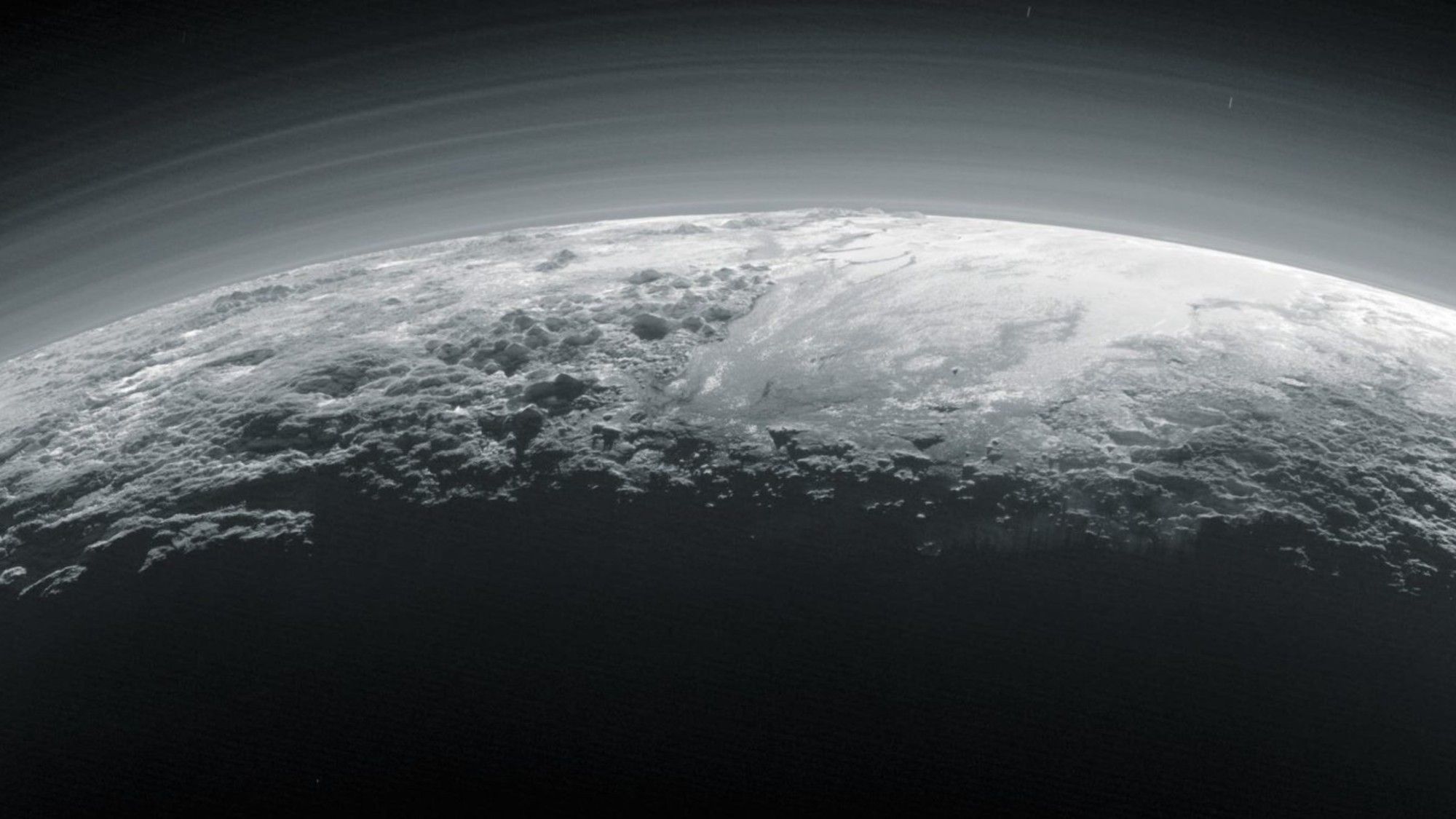
There's something hauntingly beautiful about a world losing its atmosphere. Pluto, that icy underdog of the solar system, isn't just sitting still out there in the Kuiper Belt—it's breathing. Its atmosphere swells when it swings closer to the sun, and collapses when it drifts away. Right now, we're watching the exhale. The nitrogen that once formed a thin but detectable sky is condensing into crystalline frost on Pluto's surface, coating its heart-shaped glacier and its dark, cratered plains in a fresh layer of cold.
This isn't just a planetary weather report; it's a window into how small worlds live and die. Pluto's orbit is dramatically elongated, taking it from 30 to nearly 50 astronomical units from the sun. Over its 248-year journey, the temperature swings are enough to drive phase changes on a planetary scale. When it's closer, the nitrogen ice sublimates into a thin atmosphere. When it's farther, that same gas freezes back out. It's a planetary heartbeat—one that takes centuries to complete a single cycle.
What makes this especially poignant is that we're only catching this moment because of the New Horizons flyby in 2015, which gave us our first close-up look at this distant world. The spacecraft arrived just as Pluto's atmosphere was at its peak, and now ground-based telescopes are watching it fade. We're witnessing a transition that won't repeat for another century. The fact that we can observe such slow, grand-scale processes from Earth is a testament to how far astronomy has come—and how much more there is to learn about the frozen frontiers of our solar system.
There's also a deeper resonance here. Pluto's shrinking atmosphere is a reminder that the solar system is not static. Every world, from the scorching surface of Venus to the icy plains of the Kuiper Belt, is in constant flux. And as we plan future missions to these distant realms, understanding these cycles will be crucial. If we ever send a probe to orbit Pluto, it will need to survive a world that is literally freezing its atmosphere out of the sky.