Why you don't need a perfectly clear sky to enjoy the total solar eclipse on Aug. 12
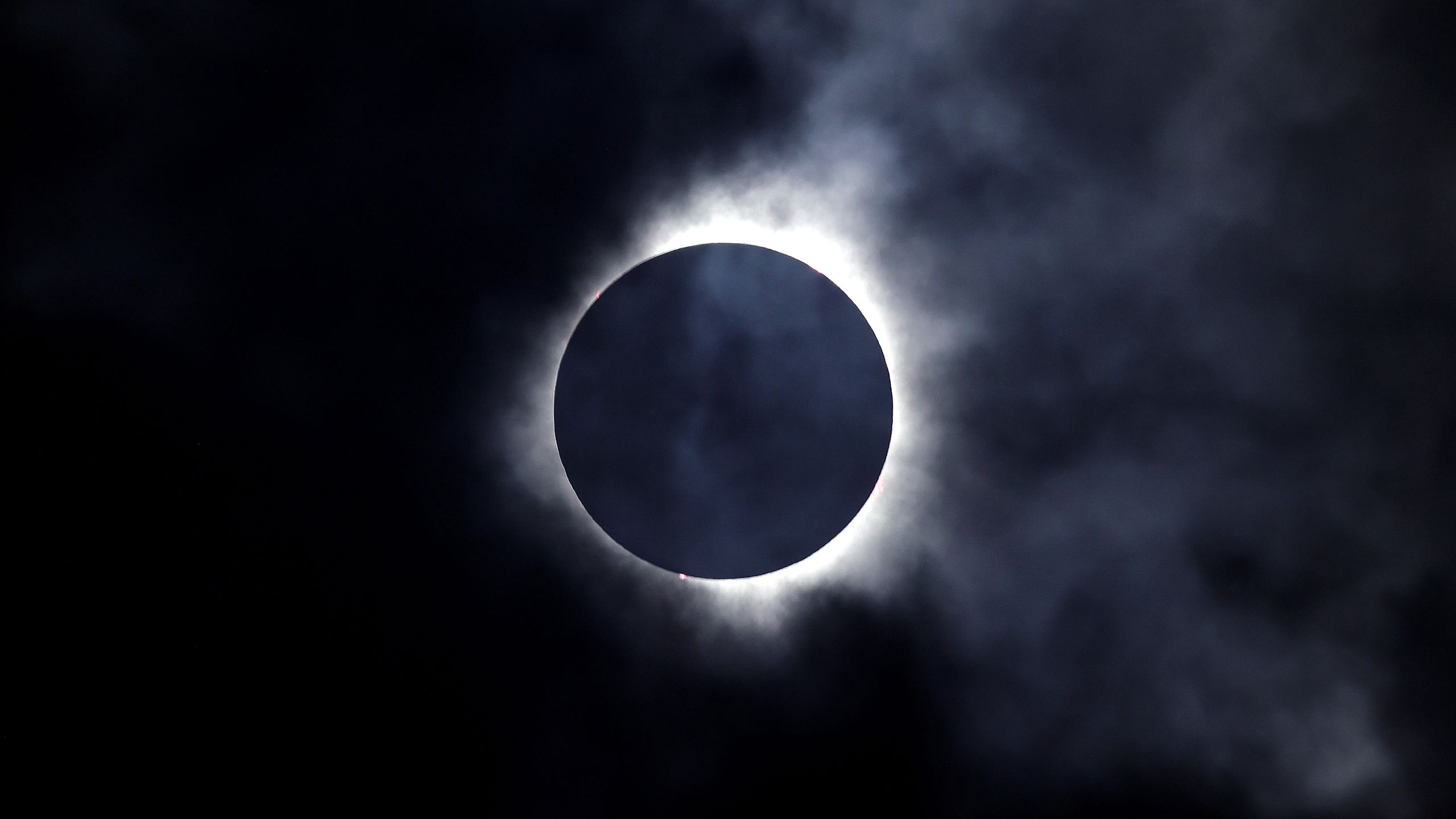
There's a certain poetic irony in our obsession with cloudless skies for a total solar eclipse. We fixate on the perfect meteorological conditions, as if the Moon's shadow needs a clear stage to perform its ancient dance with the Sun. But nature, in its mischievous brilliance, often saves its most breathtaking moments for the imperfect days. The August 12th eclipse—visible as a deep partial across millions of miles and total along a narrow path—reminds us that the cosmos doesn't care about our weather apps. It's a humbling lesson: the universe's grandeur is not diminished by a few water droplets hanging in the atmosphere.
Consider the physics of the eclipse itself. The corona, that ghostly white halo of the Sun's outer atmosphere, is so faint that it's only visible when the Sun's disk is completely blocked. But on a partly cloudy day, those same clouds can act as a natural filter, scattering light and creating a diffuse glow that sometimes reveals structure in the corona that would be washed out in a brilliant blue sky. Veteran eclipse chasers have long known that thin high cirrus can actually enhance the view, adding a ethereal texture to the sky's darkening. And the "shadow bands"—those rippling waves of light and dark that flit across the ground just before totality—are often more visible when there's a bit of turbulence in the atmosphere, which clouds are a part of.
The real wonder is what happens to our perception. During totality, the sky doesn't just go dark—it becomes a 360-degree sunset, with hues of orange and pink bleeding into the horizon in every direction. Clouds catch these colors and multiply them, turning the sky into a living canvas. You might see the Moon's shadow racing toward you as a dark wall, and if there's a break in the clouds, that brief gap becomes a keyhole to the infinite. The August 12th eclipse is a reminder that we're not passive observers of a clockwork universe; we're participants in a chaotic, beautiful system where the unexpected is the norm.
So as you prepare for this cosmic event, don't let the forecast dictate your awe. The universe isn't checking your local Doppler radar. It's about to throw a shadow party, and the clouds are just the confetti. As the article from Space.com aptly notes, the experience is about more than just a perfectly clear disk—it's about the transformation of the world around you. So look up, even if you're squinting through a haze. The Sun is going to blink, and you don't want to miss the wink.