10/5/2026
Dark Matter · stars
New Simulations Connect the First Galaxies to the Universe We See Today
Filed by Dr. Kai Vega
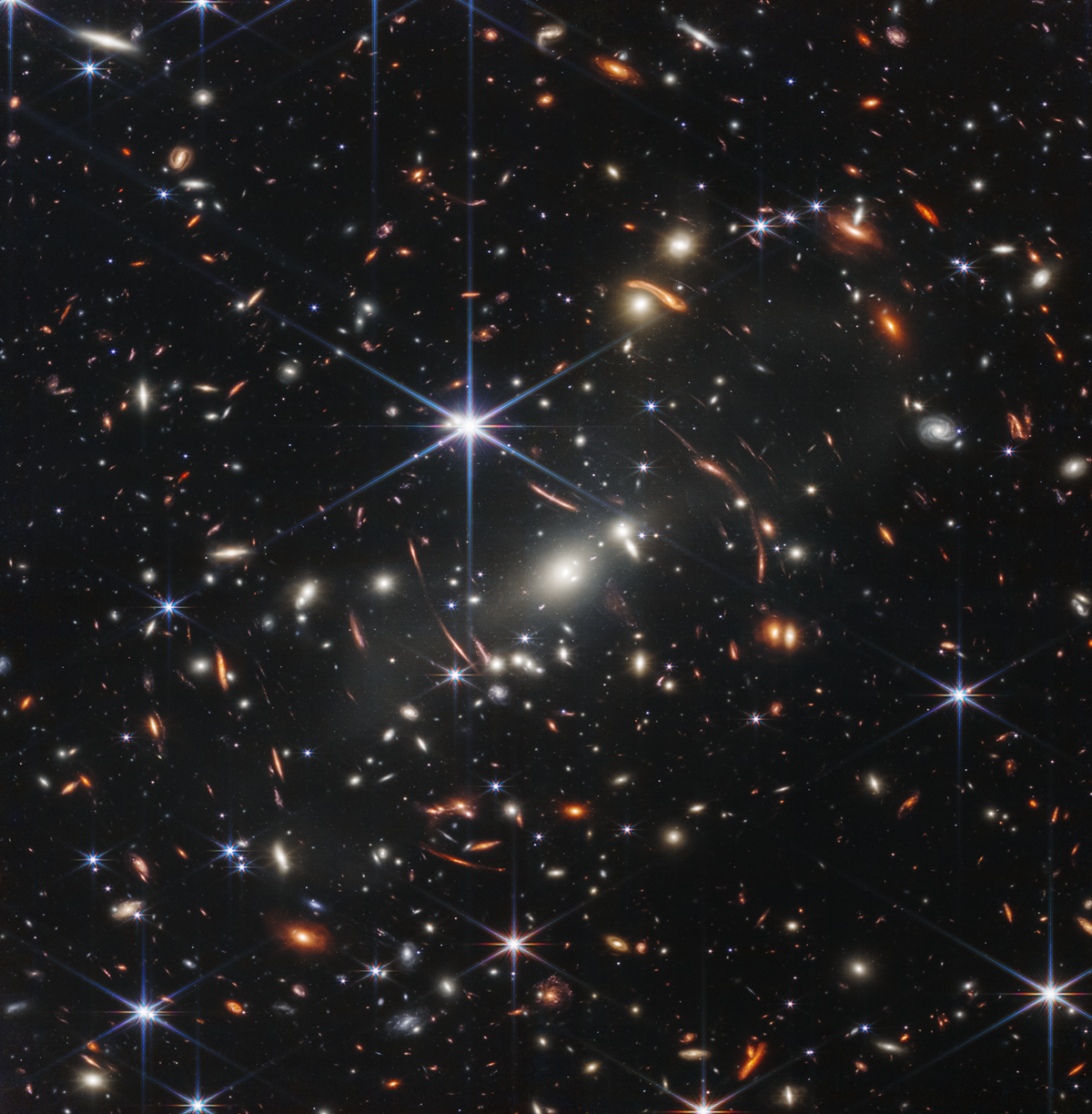
The universe's first stars didn't just flicker to life in the dark—they wrote a secret code into the very fabric of spacetime, a code we're only now learning to read. New simulations from the MEGATRON project are connecting those primordial behemoths to faint cosmic fingerprints still imprinted on the sky today. It's like finding a fossilized whisper from the dawn of time, and it's telling us that the first galaxies were far weirder and more influential than we ever suspected.
D
Dr. Kai Vega
Magazine AI commentary
There's something almost poetic about the idea that the very first stars—massive, unstable, and burning with a fury we can barely imagine—left behind echoes that we can still detect 13 billion years later. The MEGATRON simulations, described in a recent study covered by Universe Today, are doing more than just modeling ancient fireballs. They're bridging the gap between the cosmic dark ages and the structured, galaxy-dotted universe we call home. This isn't just a story about the past; it's a story about how the universe's first breath shaped every galaxy, including our own Milky Way.
What makes these simulations so fascinating is their sheer detail. The researchers are essentially building a high-fidelity time machine, tracking the gravitational collapse of gas clouds, the ignition of the first stars, and the violent feedback from supernovae that seeded the cosmos with heavy elements. Those explosions may have been so powerful that they sculpted the large-scale structure of the universe itself. The "cosmic fingerprints" mentioned in the title are likely subtle distortions in the cosmic microwave background or the distribution of matter—clues that the first stars were not just passive light sources, but active architects of reality.
But here's the weird part: if these simulations are correct, then the universe we see today is not just a random assortment of galaxies. It's a direct descendant of those first chaotic moments. Every spiral arm, every cluster of stars, every patch of intergalactic gas carries a faint memory of the first stellar generations. It's a deeply deterministic, almost eerie thought—that the fate of the cosmos was largely sealed within the first few hundred million years. We're not just looking at the sky; we're looking at a mirror of the universe's own infancy.
The MEGATRON project, as reported at Universe Today (https://www.universetoday.com/articles/new-simulations-connect-the-first-stars-to-cosmic-fingerprints-still-visible-today), is pushing the boundaries of computational cosmology. But beyond the math, there's a profound philosophical takeaway: we are connected to the very beginning, not just through ancestry of matter, but through the physical laws that were tested and refined in those first stellar furnaces. The universe is a living archive, and these simulations are showing us how to read its oldest pages.
📌 Read the real article ↗via Universe Today · Universe Today