Mars rover watches Earth disappear behind Phobos | Space photo of the day for Aug. 6, 2025
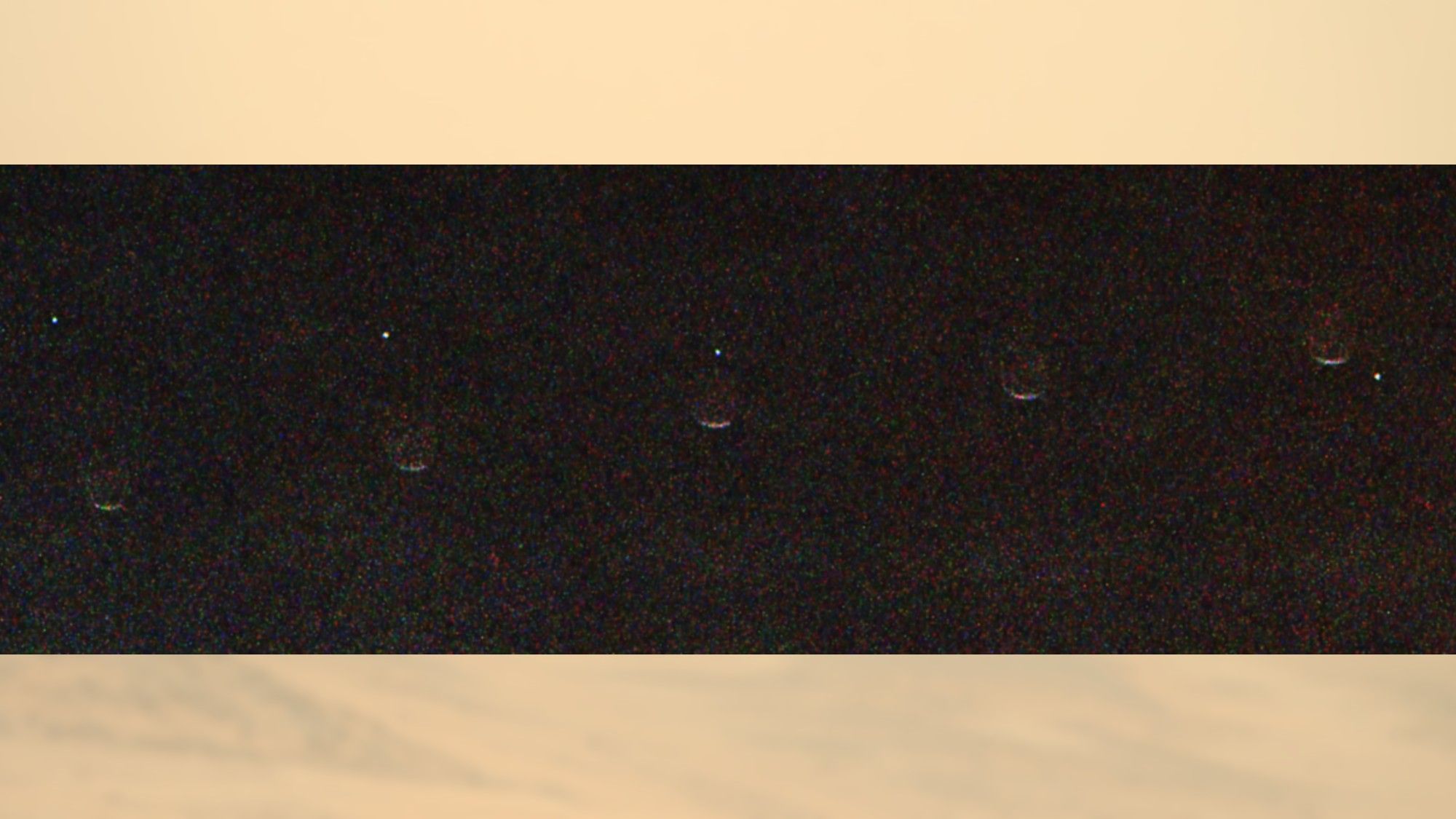
There’s something almost surreal about watching your own home world disappear behind a moon that isn’t yours. The image—captured by a Mars rover and featured as Space.com’s photo of the day for Aug. 6, 2025—shows Earth as a small, wandering star being swallowed by Phobos’ dark silhouette. It’s not just a pretty picture; it’s a moment of celestial choreography that required knowing exactly where a speeding moon would be, where a distant planet would appear, and where a robot on another world needed to point its camera.
Phobos is a weird little world. It orbits Mars so fast that it rises in the west and sets in the east, crossing the sky three times every Martian day. Meanwhile, Earth remains visible from Mars for months at a stretch, like a slow-moving beacon. The odds of one passing directly in front of the other, from a rover’s fixed viewpoint, are slim—which makes this alignment a beautiful collision of predictability and chance. The source article notes that catching this exact moment took planning and a little luck, and that’s precisely what makes it so magical.
This image also delivers a profound shift in perspective. We’re used to seeing Mars from Earth—a rusty dot in the night sky. Here, the roles are reversed. Earth is the distant dot, and Phobos is the foreground object, a lumpy chunk of rock that will one day either crash into Mars or shatter into a ring. For a fleeting moment, our entire civilization, every ocean and continent, is reduced to a pixel behind a moon that’s barely 14 miles across. Carl Sagan would have loved this.
What strikes me most is the intimacy of it. A rover—a human-made machine—sitting on an alien desert, looking up at the sky and catching a glimpse of home. It’s a reminder that we are not just observers of the universe; we are participants, capable of reaching out and seeing ourselves from the outside. And in that reflection, the cosmic and the personal merge: a tiny moon, a tiny Earth, and a whole lot of wonder.
You can see the full image and read more about the celestial timing at Space.com’s article: Mars rover watches Earth disappear behind Phobos.