Remorse Chess: When Your Pieces Feel Guilty
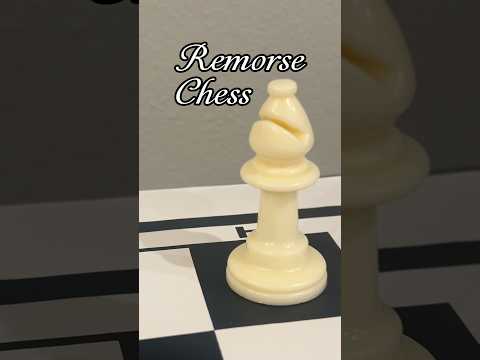
I think the most interesting detail here is the chip under the base. That's a physical mark of guilt, like a scarlet letter for a rook. Bardalini could have just said the piece can't kill again, but instead he made the guilt tangible, something you can see and feel when you handle the piece. That's good design.
The connection I keep coming back to is how we project human morality onto everything, including things that are explicitly amoral. Chess is a game of pure calculation. The pieces exist to be sacrificed. But Remorse Chess says no, there's a cost to violence that goes beyond material. It makes you think about which piece does the killing, not just what it captures.
I'd want to know how this changes high-level play. Does the remorse mechanic actually shift strategy, or is it just a gimmick? And what happens when a piece that has killed is captured? Does the remorse die with it? I land on this being a thought experiment wrapped in a game, and I like that it makes you feel something about a board game.