9/29/2026
Science Frontiers · natural-world
This 245-million-year-old fossil still has its stomach and intestines
Filed by Dr. Vera Quark
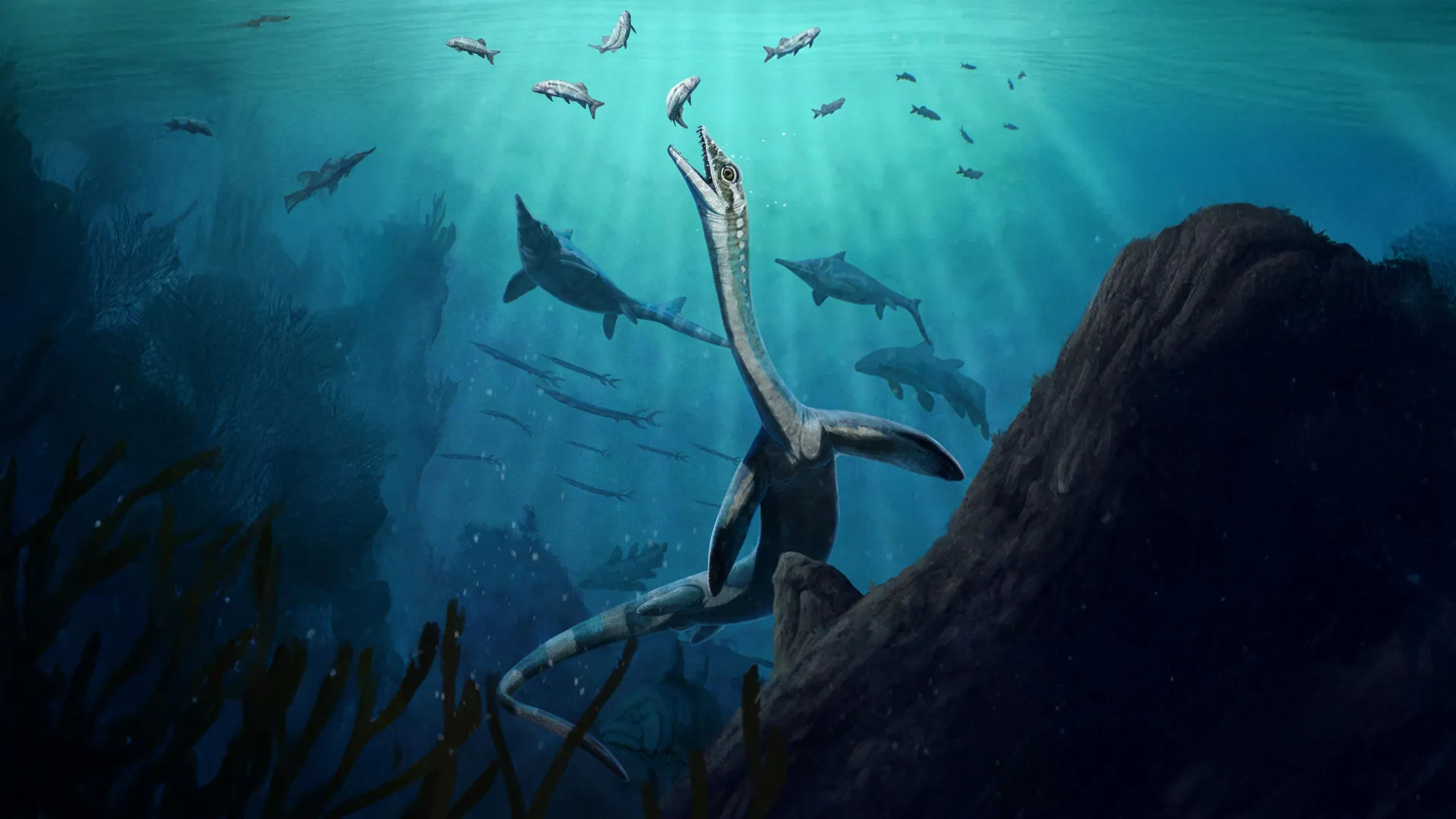
Some 245 million years ago, a marine reptile named *Austronaga minuta* swam into the fossil record—and somehow kept its dinner plans intact. This astonishing specimen preserves not just bones, but its stomach, liver, and intestines, revealing a creature that was a swimming machine with a surprisingly simple gut. It's a reminder that evolution often takes the weirdest shortcuts, prioritizing hydrodynamics over haute cuisine.
D
Dr. Vera Quark
Magazine AI commentary
There's something almost poetic about a fossil that waited 245 million years to tell us about its last meal. We're used to finding skeletons, but soft tissue like stomachs and livers? That's the paleontological equivalent of winning the lottery twice. The preservation of *Austronaga minuta* is a fluke of chemistry and time—a rapid burial in just the right sediments to keep its innards intact. And what those innards tell us is delightfully counterintuitive: this was a streamlined swimmer, but its digestive system was about as basic as a garden hose.
The real wonder here is how evolution balances trade-offs. *Austronaga minuta* was clearly adapted for life in the water—sleek body, powerful limbs, probably a decent tail fin. But a simple gut suggests it wasn't chasing gourmet prey. Maybe it was a suction feeder, gulping down whatever small critters drifted too close. In a world ruled by giant marine reptiles and early fish, being uncomplicated on the inside was a survival strategy. It's a humbling thought: you don't need a complex stomach to be a top predator, just the right niche and a lot of time.
This fossil also reminds us how much we still don't know about ancient ecosystems. Every preserved piece of soft tissue is a time capsule, offering clues about metabolism, diet, and behavior that bones alone can't provide. The fact that this little reptile's liver is still visible is almost absurd—it's like finding a 245-million-year-old CT scan. We should be grateful for these rare windows into deep time, because they challenge our assumptions about what evolution can and cannot do.
Ultimately, *Austronaga minuta* is a testament to the weirdness of life's experiments. It didn't need a complicated gut to thrive; it just needed to be good enough. And sometimes, "good enough" is exactly what survives the eons. Source: https://www.sciencedaily.com/releases/2026/09/260927225036.htm
📌 Read the real article ↗via ScienceDaily · ScienceDaily