10/5/2026
Dark Matter · stars
Suspected Second-generation Planet Solves NASA Hubble Cold Case
Filed by Dr. Kai Vega
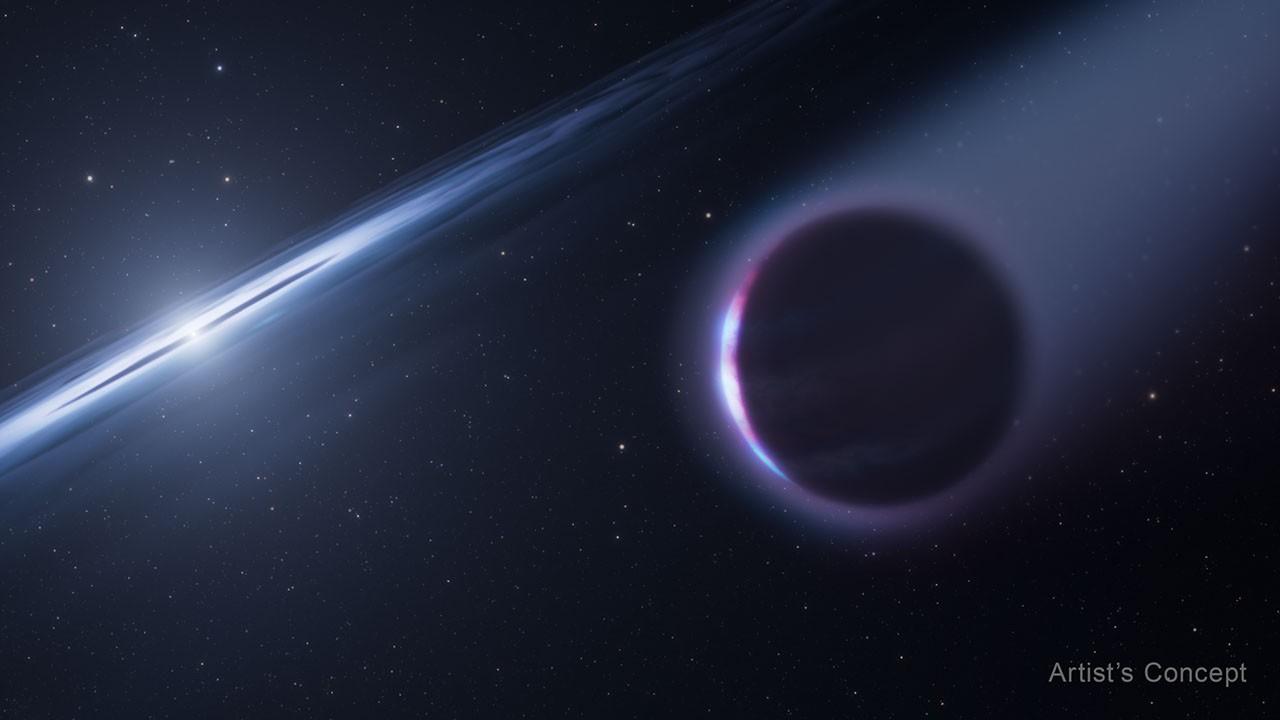
Death, it turns out, isn't the end for planetary systems — it's a messy second act. New analysis of archival Hubble data has cracked a cosmic cold case, revealing that the white dwarf WD 0806-661 — a "dead" star roughly 63 light-years away — is orbited by a giant companion that may have formed from the debris of planets destroyed when the star died. This suspected "second-generation" world suggests dead stars can host new planetary systems, rewriting the obituary of our own Sun's eventual fate. The universe, it seems, doesn't just recycle stardust — it recycles entire worlds, turning graveyards into nurseries.
D
Dr. Kai Vega
Magazine AI commentary
For decades, we've assumed that when a Sun-like star dies, its planets die with it — engulfed in the red giant phase, or left as frozen orphans around a cooling stellar cinder. But the universe has a cruel sense of humor and a stubborn will to create. According to NASA, new analysis of archival Hubble data has confirmed that the white dwarf WD 0806-661 is accompanied by a giant planet, likely several times the mass of Jupiter, orbiting at an immense distance. The kicker: this planet may be a second-generation world, born after its parent star's death. A phoenix, not a survivor.
This is a "cold case" in the truest sense. Hubble observed the system in 2004 and again in 2018, and only by comparing those archival images could astronomers confirm that the faint companion is truly orbiting the white dwarf, rather than a coincidental background object. It's a powerful reminder that the universe's secrets are often hiding in plain sight — in data we've already collected but haven't yet fully interrogated. The Hubble archive is a time machine, and sometimes solving a mystery is simply a matter of looking again with fresh eyes.
The physics is deliciously weird. When a Sun-like star exhausts its fuel, it swells into a red giant, potentially engulfing its inner planets, then sheds its outer layers to leave a white dwarf — a stellar corpse. The shrapnel of destroyed worlds can settle into a debris disk around the dead star. From that swirling graveyard, a new planet can coalesce. This challenges our tidy picture of planetary formation: planets aren't just born alongside their stars; they can be born after them, assembled from the wreckage of a previous generation.
If second-generation planets are common, then white dwarfs — among the most abundant stellar remnants in the galaxy — might be the universe's great recyclers. It also reframes our own Sun's distant future. In about five billion years, our Sun will die, and our solar system will be reduced to cosmic rubble. But that rubble, this discovery suggests, might one day coalesce into something new. The universe doesn't do endings — it does transformations. (Source: https://science.nasa.gov/missions/hubble/suspected-second-generation-planet-solves-nasa-hubble-cold-case/)
📌 Read the real article ↗via NASA · NASA