Why do black hole flares die out? It may be down to how stars spin
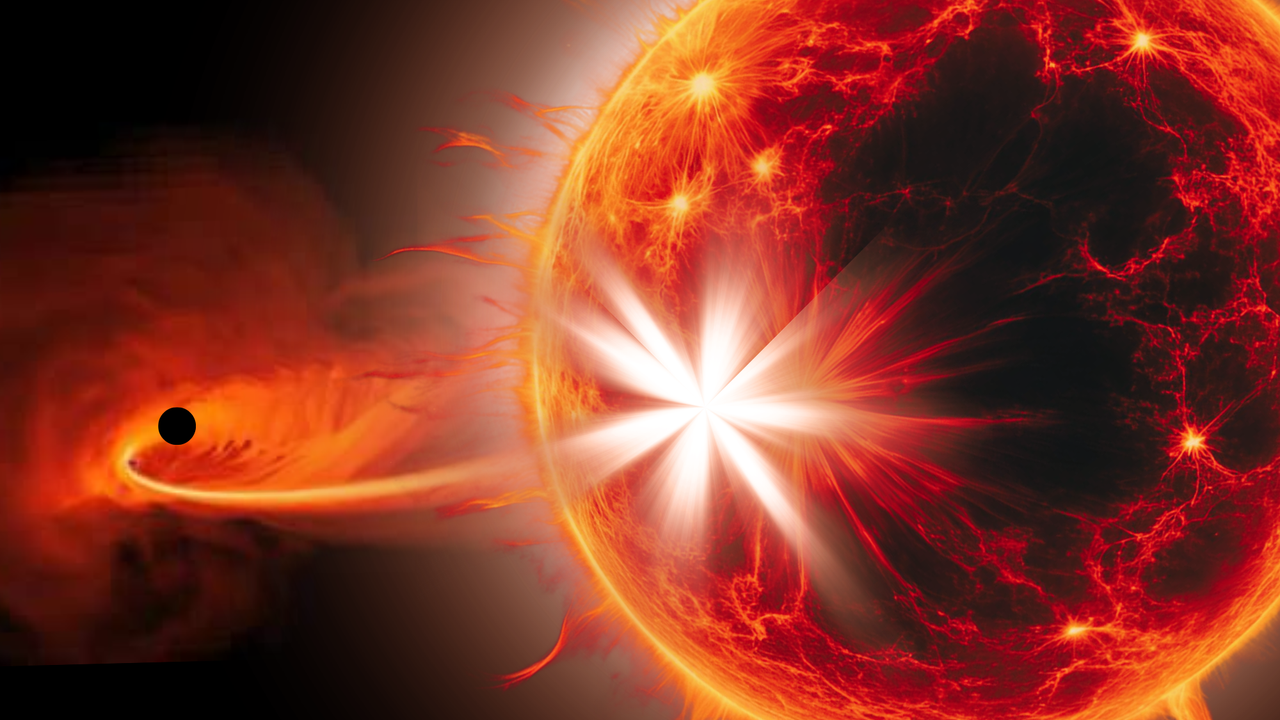
There is something profoundly poetic—and deeply unsettling—about a star that brushes against a supermassive black hole and lives. We tend to think of black holes as absolute: the ultimate finality, the point of no return. But the reality, as this research reminds us, is messier. These "partial tidal disruption events" are not clean kills. They are maimings, repeated and rhythmic, where each close pass strips away another layer of the stellar atmosphere, sending a flare of radiation across the cosmos before the star limps away to heal—until the next orbit brings it back.
The key variable, according to the new modeling, is stellar spin. A star that rotates faster presents a different cross-section to the black hole's tidal forces, changing how much material gets ripped loose and how quickly the flare fades. This is where speculative fiction finds its foothold. We are watching a slow-motion cosmic extraction, a process that could theoretically continue for thousands of orbits, until the star is reduced to a dense cinder or finally crosses the horizon. It's a reminder that destruction in the universe is rarely instantaneous; it is often a negotiation, a series of compromises between gravity and angular momentum.
This also connects to a broader theme that Starfall Weekly keeps circling back to: the resilience of matter under extreme duress. The star in these events isn't just a passive victim. Its spin, inherited from its formation and altered by every encounter, actively shapes its own fate. In a universe that seems to favor entropy, here is a system where a single parameter—rotation—determines the tempo of destruction. It's a small but potent example of how the microphysics of a star can write itself across the macro-scale of galactic light curves.
As we build instruments capable of catching these transient flares in real time—like the Rubin Observatory's upcoming surveys—we will be watching these stellar survivors in unprecedented detail. Every dimming flare will be a data point in a story about endurance, loss, and the slow grind of gravity. And perhaps, in these repeated near-death experiences, we'll find new physics about how stars hold themselves together when the universe is trying to tear them apart. The original research, as reported by Space.com, is a reminder that the sky is full of these quiet, violent dramas—if only we know how to look.