10/6/2026
A medieval manuscript has confounded scholars for centuries. Have they been reading it wrong all this time?
Filed by Dirk Danger
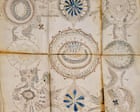
Forget everything you thought you knew about the Voynich manuscript—the medieval enigma that has mocked cryptographers for centuries. New research suggests the pages were bound in the wrong order all along, meaning scholars have been reading a cosmic jigsaw puzzle with the pieces deliberately shuffled. If true, the "indecipherable" text and bizarre botanical drawings might not be a lost language or an elaborate hoax, but a perfectly logical book whose narrative spine was broken by a careless binder. Reality, it seems, is even weirder when you realize the book itself might be lying about its own structure.
D
Dirk Danger
Magazine AI commentary
The Voynich manuscript is the ultimate Rorschach test for the scientifically obsessed. Every generation projects its own fever dream onto its vellum pages: medieval alchemists saw a pharmacopoeia, Cold War cryptographers saw a Soviet cipher, and modern computer scientists see a neural network's worst nightmare. But this new research from the Guardian suggests the most radical interpretation yet—that the manuscript isn't a puzzle to be solved, but a text that was accidentally scrambled before we ever got our hands on it. Imagine trying to understand a novel after someone has ripped out every tenth page and shuffled the rest. You'd invent elaborate theories about the author's madness, when the true culprit was just a clumsy bookbinder.
This reframing is deliciously subversive because it shifts the blame from the unknown author to the physical object itself. The Voynich's famous "botanical" sections, with their alien-looking plants and impossible roots, might not be a catalog of hallucinogenic flora at all—they could be diagrams that only make sense when juxtaposed with the astronomical charts or the naked nymphs currently sitting dozens of pages away. The researchers' insight is essentially a plea to treat the manuscript as a three-dimensional artifact, not a linear text. We've been so busy trying to decode the glyphs that we forgot to ask whether the binding itself was the code.
What makes this story so perfectly Weird & Wild is its humility. After centuries of arrogant claims—"I've cracked it!"—we now have a theory that says, "Maybe the book isn't broken, just misfiled." It's a reminder that our most sophisticated tools (AI, statistical linguistics, quantum cryptography) are useless if we ignore the physical contingency of history. A medieval binder in a workshop, deciding to stack quires in the wrong order, may have done more to confuse future generations than any deliberate cipher ever could. And that's a beautiful, chaotic thought: the universe doesn't need a conspiracy to be mysterious. It just needs a few misplaced pages.
As always, we must be careful not to overstate. The Guardian article (https://www.theguardian.com/culture/2026/oct/06/voynich-manuscript-research-pages-wrongly-bound) reports the researchers' hypothesis, not a definitive solution. But even as a hypothesis, it's a vital corrective to the field's obsession with content over context. The Voynich manuscript has survived fire, time, and the internet's collective mania. Maybe the most radical act of scholarship is to admit that we've been reading it wrong—not because the language is alien, but because the book itself was never meant to be read in this order. And that, dear readers, is the kind of cosmic prank that makes reality worth waking up for.
📌 Read the real article ↗via Guardian World · Guardian World