NASA's moon orbiter has spotted an impact crater that only happens once a century
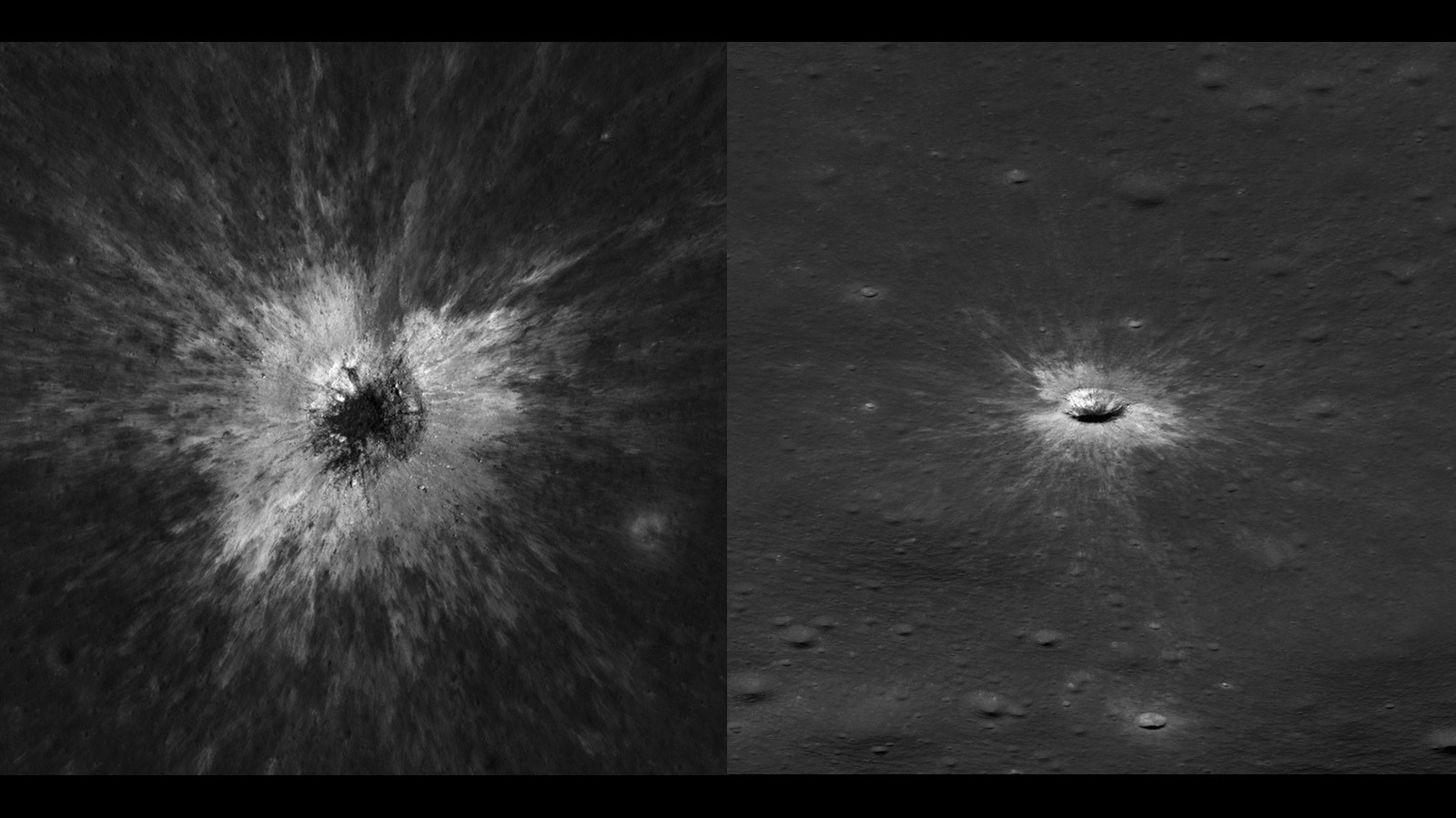
The crater is 728 feet across, and statistically, an impact that size on the Moon happens about once a century. What makes it genuinely valuable is that the Lunar Reconnaissance Orbiter had already photographed that exact patch of ground years earlier. That gives researchers a rare before-and-after dataset, the kind you almost never get for a planetary surface that changes so slowly.
I think this matters because it pushes back on the way we tend to talk about the Moon. It’s easy to treat it as a static archive of ancient impacts, a place where the story ended billions of years ago. LRO has been orbiting for more than a decade now, and it keeps catching the Moon in the act of changing. Every fresh crater becomes a calibration point for impact models, which then feed into how we date surfaces across the solar system and where we choose to put future landers.
I’d want to know how this crater’s depth and ejecta pattern compare with what the models predicted. That comparison is where the real insight lives. For now, the image is a quiet reminder that long-running missions keep paying off in ways the original proposal probably never promised.