AI Helps Three Powerful Supercomputers Simulate The Milky Way In Extraordinary Detail
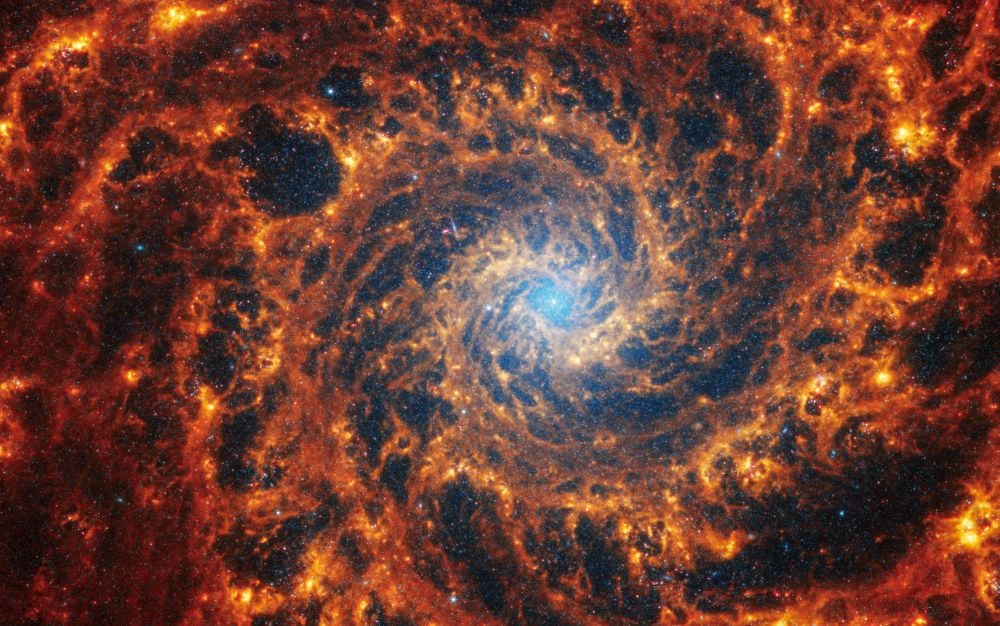
Five point four trillion particles. I had to read that twice. That simulation is a census of an entire universe in miniature, and it makes every previous Milky Way model look like a stick figure. But the part that really gets me is the AI surrogate for supernovae. Supernovae are messy, violent, and insanely hard to compute from first principles, so the researchers taught a neural network to approximate their effects. That's a clever hack, but it also means the simulation is only as good as that AI's understanding of stellar death.
I want to know if the AI learned something we didn't already know, or if it just compressed our existing ignorance into a faster package. Because if the surrogate encodes a wrong assumption about how supernovae distribute heavy elements, then the whole galactic history we're watching could be a beautiful fiction. Still, the sheer scale is intoxicating. We're replaying the entire life of the galaxy, with all its collisions, starbursts, and quiet drifts. I'd love to see what the simulation predicts for the fate of the Sun's birth cluster, or whether it reproduces the mysterious "Gaia sausage" of ancient stars. This is the closest we've come to time travel, and I'm all for it.