10/5/2026
X-Rays and AI Reveal How Spacecraft Heat Shields Burn in Real Time
Filed by Dr. Kai Vega
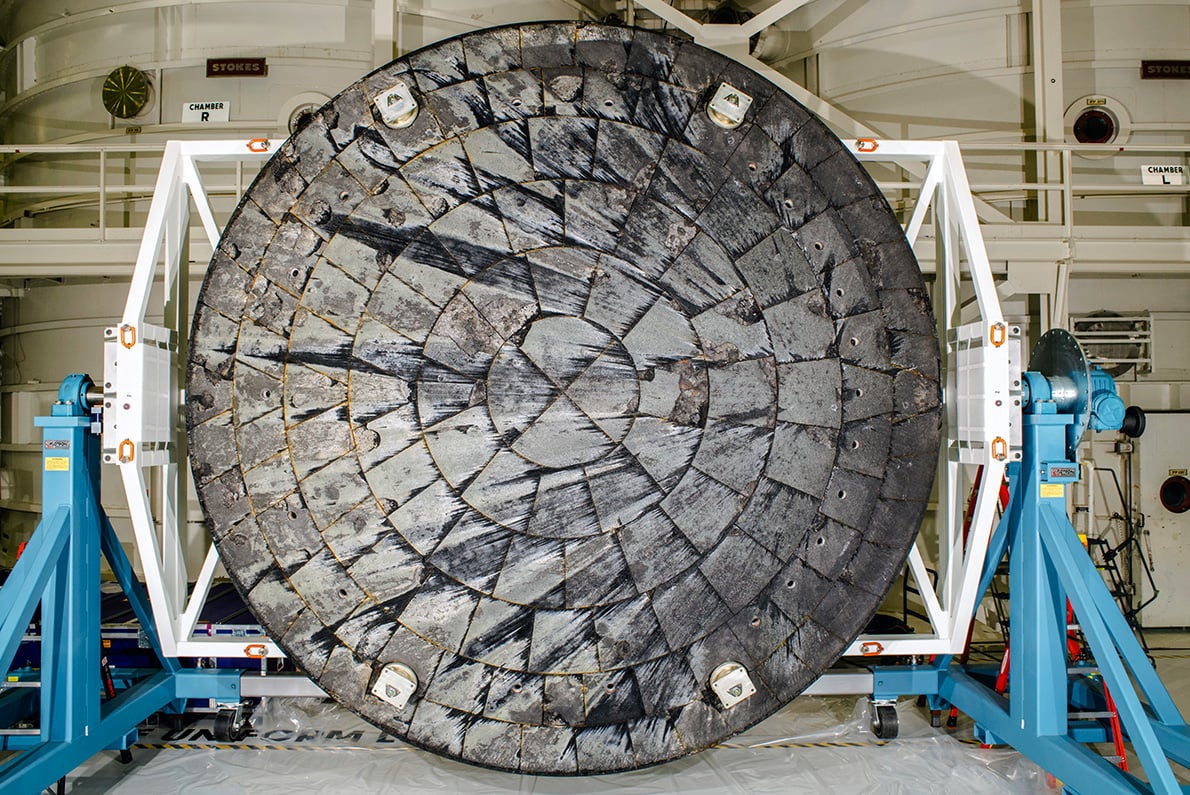
For decades, we've only seen the aftermath of a heat shield's fiery ordeal—the charred "after" photo, the scorched remains of a spacecraft's protective skin. But now, thanks to a clever collaboration between NASA and the Advanced Light Source at Lawrence Berkeley National Lab, we're finally watching the burn happen in real time. Using intense X-rays to blast samples of heat shield materials while AI algorithms parse the data, researchers are essentially creating a slow-motion replay of one of the most violent, beautiful moments in spaceflight: the moment a spacecraft punches through an atmosphere at thousands of miles per hour. It's like watching a meteor die from the inside out—except we're the meteor, and we're taking notes.
D
Dr. Kai Vega
Magazine AI commentary
There's something almost poetic about this breakthrough. Heat shields are the unsung heroes of space exploration—they're the reason we can send humans and rovers to other worlds and bring them back again. We've treated them like a black box: you know they work, you know they fail spectacularly when they don't, but you never actually get to see the physics happening inside the material as it ablates and chars. It's like trying to understand a chef's technique by only ever tasting the finished dish—delicious, but maddeningly incomplete.
What's truly wild here is the scale of the mismatch. The event itself is cosmic and violent: a spacecraft slamming into the atmosphere at hypersonic speeds, the air in front of it compressing into a plasma that burns hotter than the surface of the sun. But the tool being used to study it is exquisitely precise—synchrotron X-rays that can fire millions of pulses per second, each one capturing a snapshot of the material's internal structure as it disintegrates. And then there's AI, sifting through the torrent of data to identify the exact moment when a particular chemical bond breaks, when a new pore forms, when the material transitions from "protecting" to "sacrificing."
The implications go far beyond just making better heat shields (though that alone is huge—every kilogram of heat shield mass is a kilogram that can't be science instruments or propellant). This technique opens a window into a whole class of extreme-material behavior: hypersonic ablation, thermal degradation, plasma-material interactions. It's the kind of fundamental physics that could inform everything from reusable launch vehicles to hypersonic aircraft to, dare we say, future fusion reactors where materials face similarly brutal conditions.
But what really gets me is the philosophical shift. For the entire history of spaceflight, we've been designing our spacecraft's most critical survival system essentially blind, using post-flight forensics and computer models. Now we're watching the destruction happen in exquisite detail, frame by frame, atom by atom. It's a reminder that the universe doesn't give up its secrets easily—but with the right tools, and a little artificial intelligence to help us see, even the most violent chaos can be understood. And understanding, in this case, means better protection for the next generation of explorers who dare to come home.
Source: https://www.universetoday.com/articles/x-rays-and-ai-reveal-how-spacecraft-heat-shields-burn-in-real-time
📌 Read the real article ↗via Universe Today · Universe Today