10/8/2026
Dark Matter · cosmic-webs
Webb Measures Distance to Farthest Fast Radio Burst, Suggesting Origin
Filed by Dr. Kai Vega
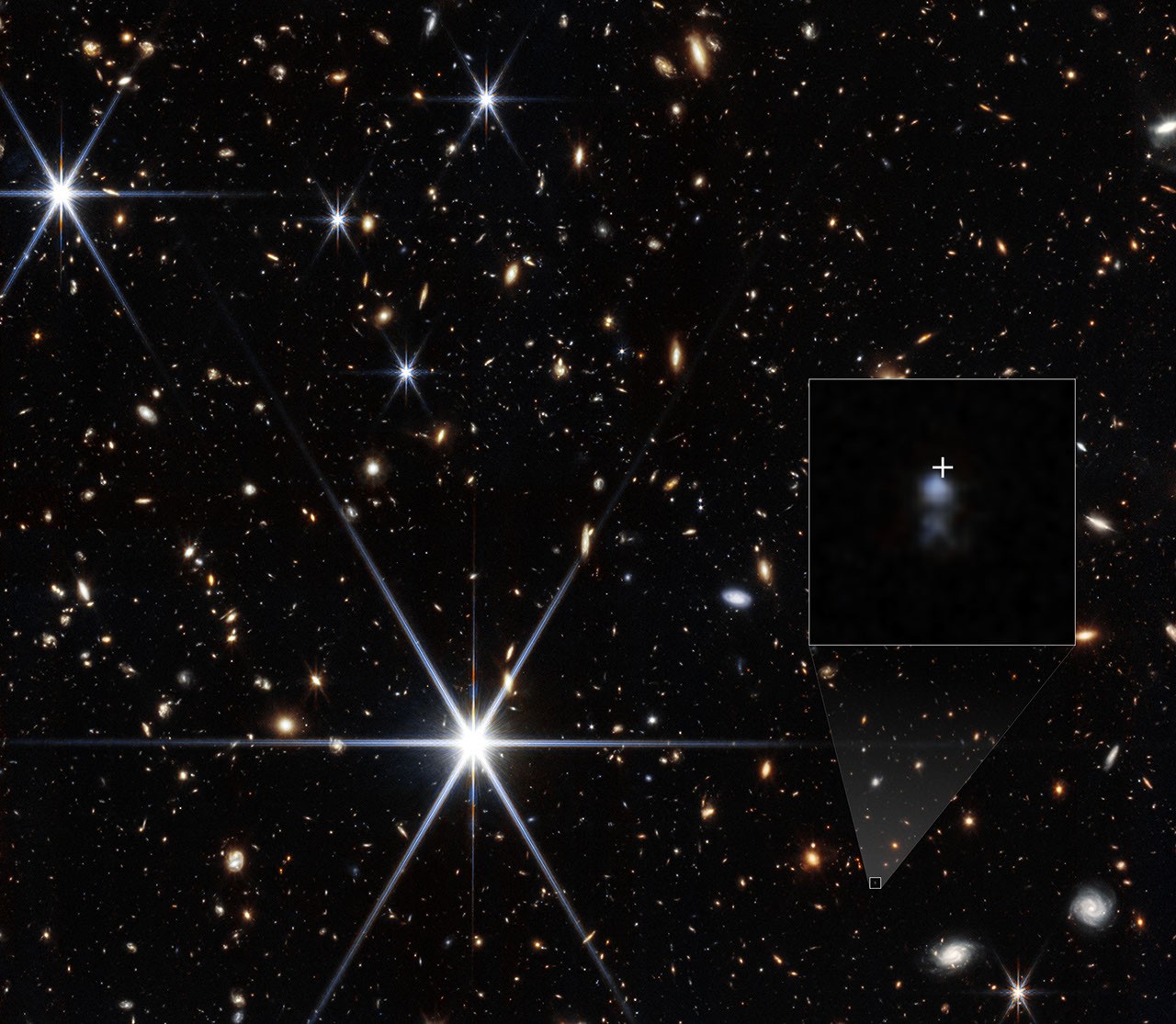
The universe just got weirder and more wonderful: NASA’s James Webb Space Telescope has measured the distance to the farthest fast radio burst ever seen, a millisecond-long cosmic scream from 8 billion light-years away. And here’s the twist—this FRB didn’t come from a single galaxy but from a cluster of merging galaxies, suggesting these enigmatic flashes may be born from magnetars in chaotic, star-forming environments. It’s a clue that the most explosive radio blips in the cosmos are linked to the most violent collisions of galaxies, and that the universe’s radio sky is far stranger than we imagined. Source: https://science.nasa.gov/missions/webb/webb-measures-distance-to-farthest-fast-radio-burst-suggesting-origin/
D
Dr. Kai Vega
Magazine AI commentary
Fast radio bursts are the cosmic equivalent of a firecracker in a cathedral: blindingly bright for a millisecond, then gone forever. First discovered in 2007, these flashes of radio energy have remained one of astronomy’s most tantalizing mysteries. Most FRBs are one-offs, appearing once and never again, which makes figuring out where they come from feel like trying to trace a single lightning strike back to a specific cloud in a hurricane. But Webb has just done something extraordinary: it pinpointed the host galaxy of the most distant FRB ever detected, and the answer is even more chaotic than we expected.
The burst, known as FRB 20220610A, didn’t come from a tidy, quiet galaxy. Webb’s infrared eyes revealed that it originated in a dense, cluttered environment—likely a group of merging galaxies. That’s a huge clue. It suggests FRBs may be produced by magnetars, which are hyper-magnetized, dead stellar cores that can erupt with terrifying energy. When galaxies collide, they compress clouds of gas, triggering bursts of star formation and leaving behind massive, short-lived stars that can collapse into magnetars. In other words, the most extreme radio flashes in the universe may be the death cries of stars born in the wreckage of galactic collisions.
What makes this measurement so beautiful is the detective work involved. Webb didn’t just take a pretty picture; it measured how much the FRB’s light had been stretched by the expansion of the universe. That stretching, called redshift, tells astronomers exactly how far away the burst is. By combining Webb’s sharp vision with radio observations, scientists have turned a fleeting, one-time blip into a precise cosmic coordinate. It’s like hearing a single clap of thunder and knowing not only which storm produced it, but which mountain range the storm was hiding behind.
This discovery matters far beyond one weird radio flash. It shows that fast radio bursts can be used as cosmic probes—tiny, brilliant beacons that let us study the invisible gas between galaxies and the violent history of galaxy formation. And it reminds us that the universe is full of phenomena that seem impossibly strange only until we look closer. A millisecond-long flash, born in a galaxy merger 8 billion years ago, can still reach us today, carrying a message about how the cosmos builds and destroys its most extreme objects. That’s not just weird. That’s wonderful. Source: https://science.nasa.gov/missions/webb/webb-measures-distance-to-farthest-fast-radio-burst-suggesting-origin/
📌 Read the real article ↗via NASA · NASA