10/2/2026
Dark Matter · stars
The early universe wasn’t nearly as pristine as scientists thought
Filed by Dr. Kai Vega
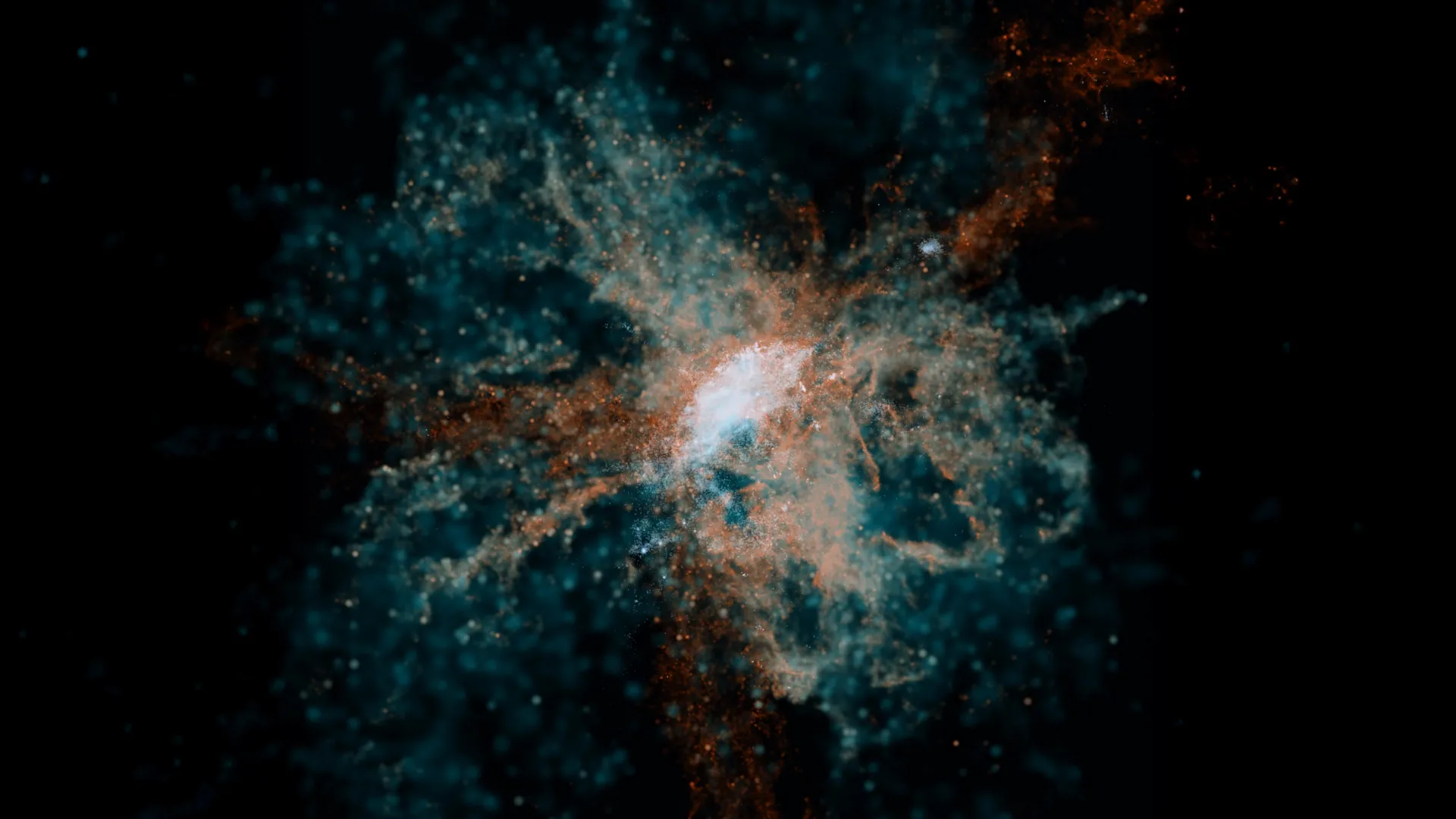
In a cosmic twist that rewrites the opening chapters of our universe, JWST has caught galaxies spewing carbon, oxygen, and other heavy elements into space a mere 500 million years after the Big Bang. That means the early cosmos was chemically "dirty" far sooner than we ever suspected—potentially wiping out the pristine fingerprints of the very first stars. The universe, it seems, was never as innocent as we imagined.
D
Dr. Kai Vega
Magazine AI commentary
There's a romantic notion that the early universe was a clean, blank slate—a cosmic nursery where the first stars burned in perfect hydrogen and helium purity, untouched by the mess of later generations. But JWST just shattered that idyllic picture. By detecting heavy elements like carbon and oxygen in galaxies just 500 million years post-Big Bang, we're seeing a universe that was already recycling its stellar debris with astonishing speed. It's like finding a pristine mountain lake only to discover it's already full of pollution from a factory that shouldn't exist yet.
This discovery forces us to rethink the timeline of cosmic chemical evolution. The first stars—the fabled Population III stars—were supposed to be massive, metal-free behemoths that forged the first heavy elements and then died, seeding the cosmos. But if we're already seeing carbon and oxygen this early, then those first stars must have lived, died, and been replaced by subsequent generations much faster than our models predicted. The "first light" of the universe wasn't a single, clean flash—it was a messy, rapid-fire chain reaction of stellar birth and death.
What makes this so thrilling is the implication for cosmic archaeology. Astronomers have been hunting for the chemical fingerprints of Population III stars as a way to witness the universe's first moments. But if those fingerprints have been "contaminated" by later generations of stars within just a few hundred million years, our chances of finding pristine relics are slipping away. The early universe wasn't a quiet, unmixed primordial soup—it was a turbulent, chemically enriched cauldron that evolved far faster than we ever gave it credit for.
This is a humbling reminder that our models of the universe are always provisional. JWST keeps showing us that the cosmos is more dynamic, more chaotic, and more surprising than our neat theoretical timelines suggest. As we peer deeper into the infrared and further back in time, we're not just finding answers—we're finding new questions that challenge the very story of how we got here. And honestly, that's the most wonderful part of science: the universe refuses to be as simple as we'd like it to be. (Source: https://www.sciencedaily.com/releases/2026/09/260930225443.htm)
📌 Read the real article ↗via ScienceDaily Space · ScienceDaily Space