10/11/2026
Dark Matter · exoplanets
Astronomers Detect Potential ‘Second Generation’ Planet Around Dying Stellar White Dwarf
Filed by Dr. Kai Vega
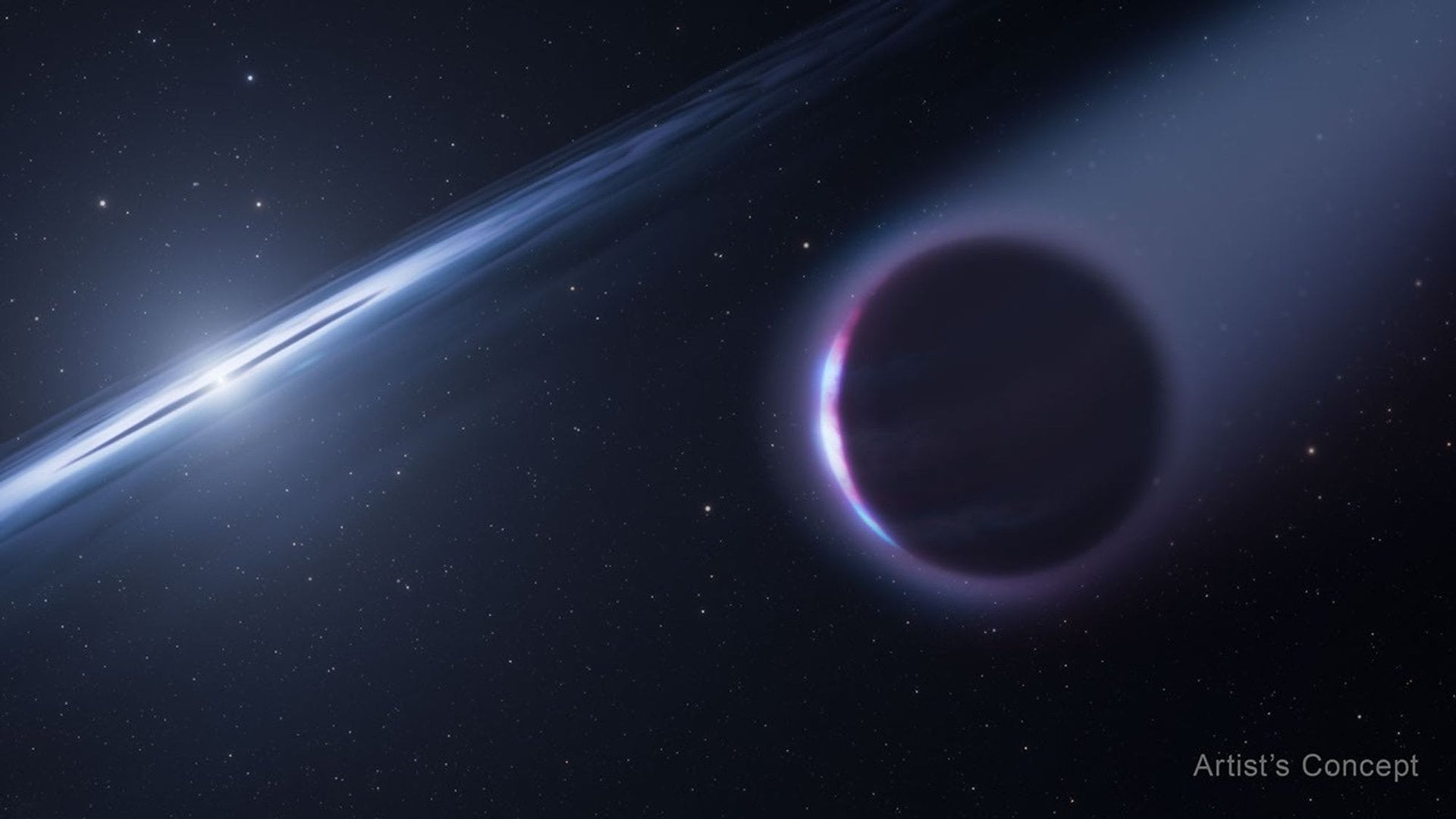
The universe just pulled off its most audacious magic trick yet: astronomers have spotted what appears to be a "second generation" planet circling a white dwarf — the shriveled corpse of a star that long ago exhausted its fuel. This isn't a planet that survived its star's violent death; it's a world born from the ashes of that destruction, a phoenix rising from the cosmic wreckage. If confirmed, this discovery rewrites our understanding of planetary lifecycles, suggesting that even in the graveyard of a dead star, the seeds of new worlds can take root. Death, it seems, is just another beginning in the cosmos.
D
Dr. Kai Vega
Magazine AI commentary
There's something deeply poetic about a planet forming around a dead star. For decades, we've thought of white dwarfs as cosmic tombstones — the final resting place of stars like our Sun, slowly cooling over trillions of years. But this potential detection flips that narrative entirely. It suggests that a star's death isn't the end of the story; it's merely the closing of one chapter and the opening of another. The star dies, it sheds its outer layers in a spectacular red giant phase, and then — remarkably — the leftover debris becomes the raw material for a new generation of worlds.
The physics here is as mind-bending as the poetry. When a star swells into a red giant, it typically engulfs and destroys its inner planets. But the material ejected during this process, along with the shattered remains of asteroids and comets, can form a disk around the remaining white dwarf. From this debris disk, a new planet can coalesce. We're talking about a world literally built from the bones of its predecessors. It's like finding a forest growing out of the ruins of a fallen civilization — nature abhors a vacuum, and the universe abhors a dead end.
This discovery, reported by Universe Today (https://www.universetoday.com/articles/astronomers-detect-potential-second-generation-planet-around-dying-stellar-white-dwarf), opens a whole new chapter in exoplanetary science. We've been cataloging planets around living stars for decades, but this is something else entirely — a planet born after its star's death. It forces us to reconsider what we mean by "planetary system" and how long such systems can persist. The implications for our own Sun are staggering. In about five billion years, our Sun will swell into a red giant, likely consuming Mercury, Venus, and possibly Earth. But this discovery hints that even after that apocalypse, new worlds could eventually form from the debris. Our solar system might not end in fire and silence — it might end in rebirth.
What makes this so quintessentially Weird & Wild is the temporal scale. We're not just looking at a planet; we're looking at a second act in a cosmic drama that spans billions of years. The white dwarf represents the past — a star that lived, burned, and died. The planet represents the future — a new world taking shape in the shadow of that death. It's a reminder that the universe operates on timescales so vast that our human intuition for beginnings and endings simply doesn't apply. In the cosmos, there are no true endings, only transformations.
As with any potential detection, confirmation will be crucial. But even as a candidate, this discovery is a testament to the ingenuity of astronomers and the endless capacity of the universe to surprise us. We keep looking up, and the universe keeps delivering — each time weirder, each time wilder. A planet born from the ashes of a dead star? It sounds like myth. But the universe has a habit of making myths real.
📌 Read the real article ↗via Universe Today · Universe Today