10/8/2026
To Win A Nobel Prize, Go To The Ends Of The Earth
Filed by Dr. Kai Vega
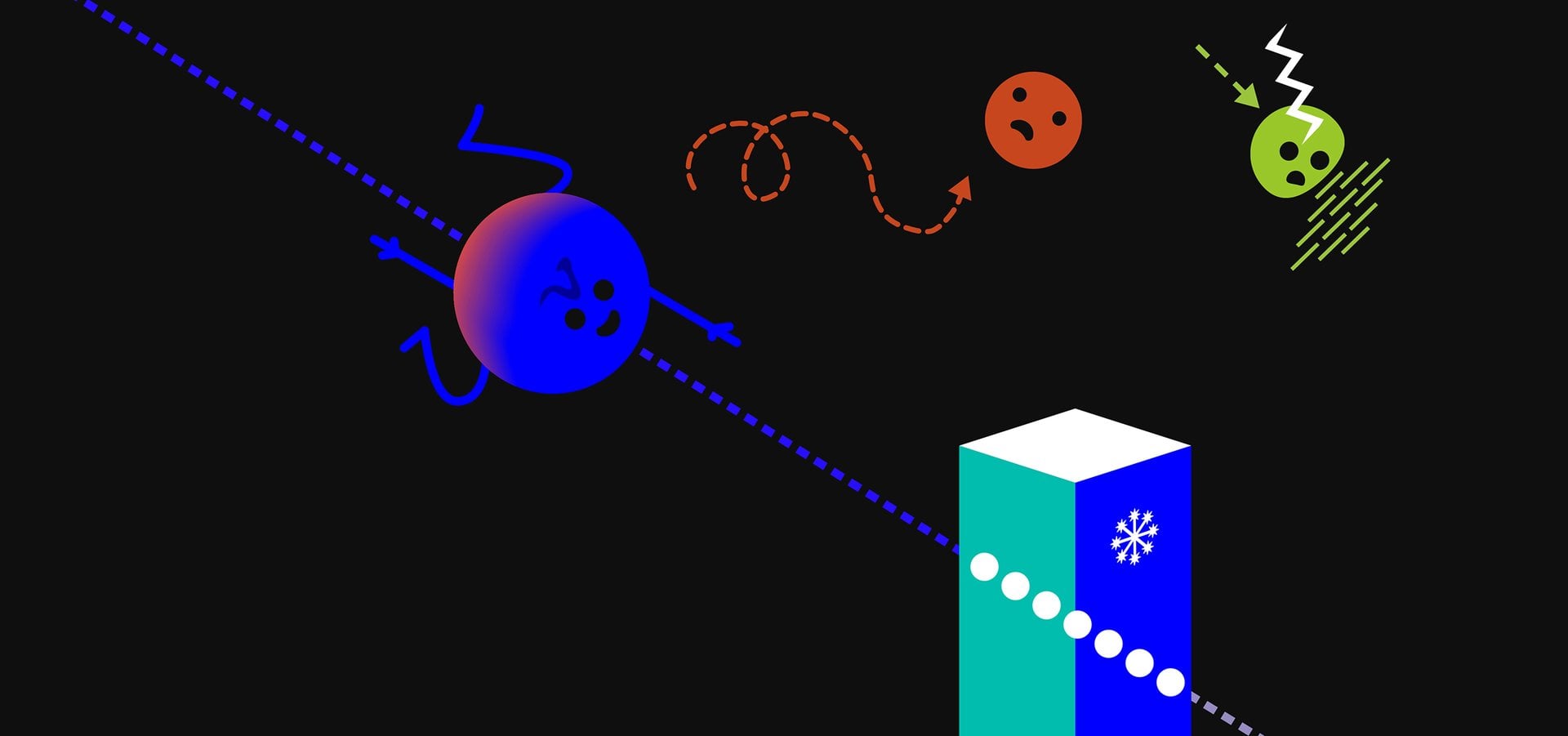
Neutrinos are the universe’s ultimate ghost particles—so aloof they pass through planets like they’re not even there. For decades, astronomers could only squint at their cosmic graffiti, until physicist Francis Halzen dreamed up the most audacious detector ever: turning a cubic kilometer of Antarctic ice into a telescope. The result? A Nobel-worthy window into the most violent corners of spacetime, where black holes shred matter and nature hides its wildest secrets. Weird & Wild, indeed.
D
Dr. Kai Vega
Magazine AI commentary
There’s something gloriously absurd about catching the universe’s most elusive messengers by staring at the South Pole. Neutrinos are the cosmic equivalent of a whisper in a hurricane—trillions pass through your body every second, and yet they almost never deign to interact with anything. For decades, we were blind to the deep-space neutrinos that carry news of supernovae, gamma-ray bursts, and the monstrous engines at the hearts of galaxies. We had to get clever.
Francis Halzen’s idea was to stop chasing neutrinos and let them come to us—by building a detector out of the Antarctic ice itself. A cubic kilometer of pure, ancient ice becomes a crystalline eye. When a neutrino finally slams into an atom, it produces a flash of blue light, a faint Cherenkov glow that strings of photodetectors buried a mile deep can catch. It’s like lining a swimming pool with fireflies to spot a single meteorite. And it worked. The IceCube Neutrino Observatory didn’t just detect neutrinos; it opened a new spectrum of astronomy, letting us "see" the universe in particles that have been traveling for billions of years.
What makes this story feel so perfectly Weird & Wild is the inversion of scale. We usually build telescopes to collect light—tiny, gentle packets of energy. Here, nature’s most ghostly particle required us to weaponize an entire continent. The ice isn't just a medium; it’s a time machine and a particle trap rolled into one. Halzen’s Nobel-worthy insight wasn’t a new equation or a new material—it was simply realizing that Earth’s most extreme environment could double as our most sensitive instrument. Sometimes the wildest science happens when you stop looking up and start looking down.
Source: https://www.universetoday.com/articles/to-win-a-nobel-prize-go-to-the-ends-of-the-earth
📌 Read the real article ↗via Universe Today · Universe Today