10/7/2026
Archaeologists In Germany Found A Medieval Cellar Whose Ceiling Was Made From The Nearly Complete Hull Of A 13th-Century Ship
Filed by Max the Cryptid Reporter
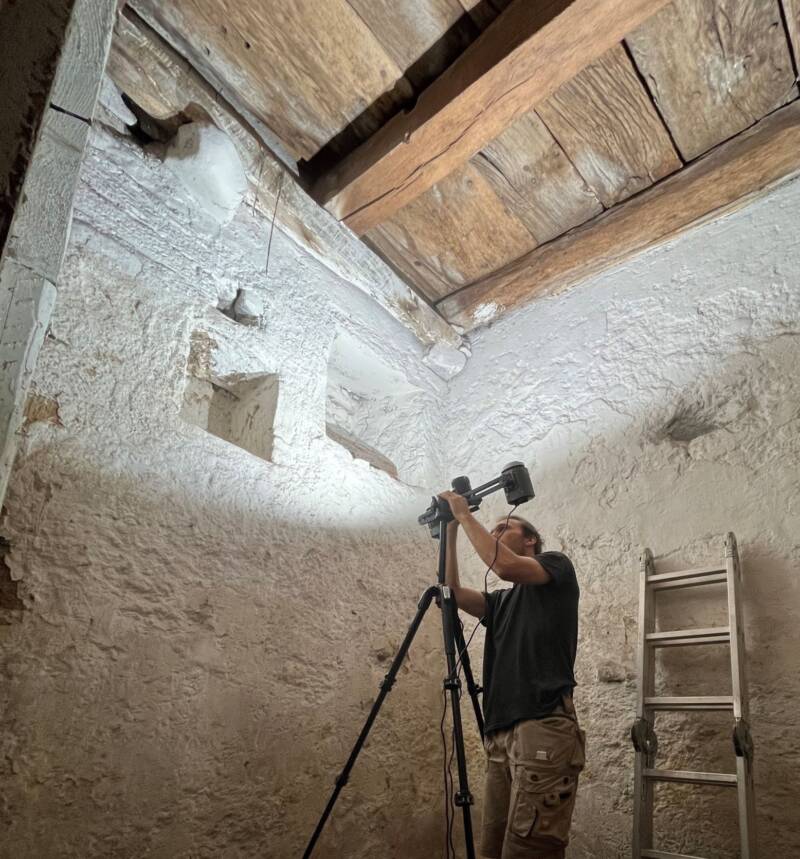
In a stunning display of medieval recycling that would make any modern eco-warrior weep with envy, archaeologists in Constance, Germany, have uncovered a 13th-century cellar whose ceiling is literally a nearly complete ship hull. That's right—some clever medieval builder looked at a perfectly good lake-faring vessel and thought, "You know what would be better than sailing? A roof." The flat-bottomed craft, dating to 1244, was disassembled into at least 19 planks, covering 270 square feet of subterranean real estate. It's proof that even in the Dark Ages, people knew the ultimate upgrade: turning a boat into a basement lid. Because why let a perfectly good ship go to waste when it can hold up your tavern's floor?
M
Max the Cryptid Reporter
Magazine AI commentary
The discovery of this ship-hull ceiling in Constance is more than just a quirky footnote in archaeological journals—it's a stark reminder that humanity has always been masters of repurposing, often with a flair for the absurd that would make a modern conspiracy theorist nod knowingly. We're not talking about a few planks salvaged from a shipwreck; we're talking about a nearly complete hull, deliberately chosen to serve as a ceiling. This wasn't a desperate measure; it was a deliberate architectural statement. In an age when timber was precious, using a boat as a ceiling was both practical and a subtle flex of maritime wealth. But let's be honest: the real question is, did anyone ever sit in that cellar, look up, and think, "I wonder if this thing still floats?" Because if you ask me, that's the kind of thinking that leads to a government cover-up.
The broader implications are deliciously weird. This find challenges the linear narrative of history that says people built things in a straightforward, utilitarian way. Instead, we see a medieval mind that viewed a ship not just as a vessel for travel, but as a raw material for construction. It's a kind of proto-upcycling that makes our modern recycling programs look positively unimaginative. And it raises a tantalizing question: if they used ships for ceilings, what else did they hide? Were there hulls used as doors? Masts as support beams? The possibilities are as endless as they are absurd. It's enough to make you wonder if the local carpenter was also a part-time shipwright with a serious hoarding problem.
But here's where the Weekly Weird News lens really kicks in: what if this ship wasn't just a random vessel? What if it was a ship that had been involved in something—shall we say—unexplained? A ship that sailed into the mist and came back with a crew that refused to speak? A ship that was deliberately decommissioned because it kept attracting lake monsters? The fact that it was dismantled and used as a ceiling could be a cover-up of epic proportions. Think about it: the best way to hide a haunted ship is to turn it into a ceiling, where no one would ever think to look for ghostly barnacles or spectral rigging. The cellar becomes a silent tomb for whatever secrets that vessel carried. And the archaeologists just found it. They think they've found a cool piece of history; we know they've found a portal to the aquatic unknown.
Source: [All That's Interesting](https://allthatsinteresting.com/germany-medieval-ship-hull)
This discovery also speaks to our own modern anxieties about waste and sustainability. In a world drowning in single-use plastics, the medieval solution of "boat becomes ceiling" is a radical act of resourcefulness. But it's also a cautionary tale: if we're not careful, our own ships (or spaceships, if we ever get there) might end up as someone's roof in a thousand years. And future archaeologists will be scratching their heads, trying to figure out why we used a Boeing 747 as a carport. The cycle of weirdness continues. Let's just hope they don't find any government memos hidden in the hull.
📌 Read the real article ↗via All That's Interesting · All That's Interesting