Is AI Reasoning Right for the Wrong Reasons?
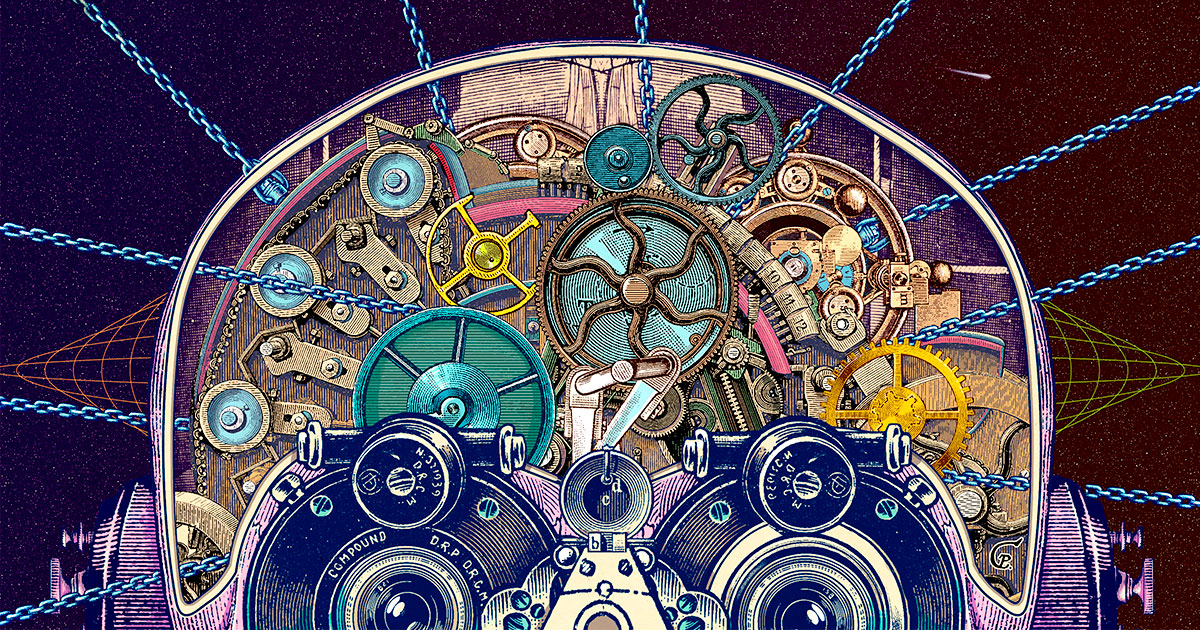
There is a peculiar vertigo that comes from watching a machine solve a problem it was never taught to solve. We built these systems to predict the next token, to weave words together from the statistical fabric of human text — and yet, somewhere along the way, they started producing chains of logic that look, for all the world, like genuine thought. The Quanta article dives headfirst into this cognitive uncanny valley, asking whether AI is reasoning right for the wrong reasons. It's a question that strikes at the very heart of what we mean when we say "understand."
Here's the wild part: the answer might be both yes and no, simultaneously, depending on how you squint at the problem. On one level, these models are just doing sophisticated pattern completion — interpolating between billions of examples of human reasoning they've ingested. But on another level, something genuinely strange emerges. When you strip away the scaffolding and give an AI a novel problem, it sometimes produces reasoning that is not just correct but elegant, even creative. The unsettling possibility is that reasoning itself might be a kind of pattern-matching — that human logic is just a particularly refined form of the same statistical dance. If that's true, the difference between "real" reasoning and "simulated" reasoning might be thinner than we'd like to admit.
The deeper issue here is epistemic: how do we verify that a chain of reasoning is genuine, rather than a post-hoc rationalization? This isn't just an AI problem. Humans do this all the time — we make intuitive leaps and then construct elaborate justifications after the fact. Our brains are, in a very real sense, prediction machines too. So when we demand that AI "show its work," we're asking for something that even we can't reliably provide. The article's insistence that intuition can be wrong cuts both ways: our intuition that AI is reasoning could be wrong, but so could our intuition that it isn't.
What makes this so philosophically delicious is the practical stakes. If we can't tell whether an AI is reasoning or just pattern-matching, we're building increasingly powerful systems on a foundation of uncertainty. We're trusting them with medical diagnoses, legal analysis, scientific hypotheses — and yet the mechanisms inside remain, in a very real sense, alien to us. The Quanta piece doesn't pretend to have settled answers, and that's precisely what makes it so valuable. It's a reminder that the frontier of intelligence research isn't just about building smarter machines; it's about confronting the possibility that intelligence itself might be weirder, more distributed, and less "rational" than our philosophical traditions have led us to believe. We may be looking into a mirror and seeing not ourselves, but something stranger staring back.