Two Million X-Ray Sources, and One Cluster That Doesn't Fit
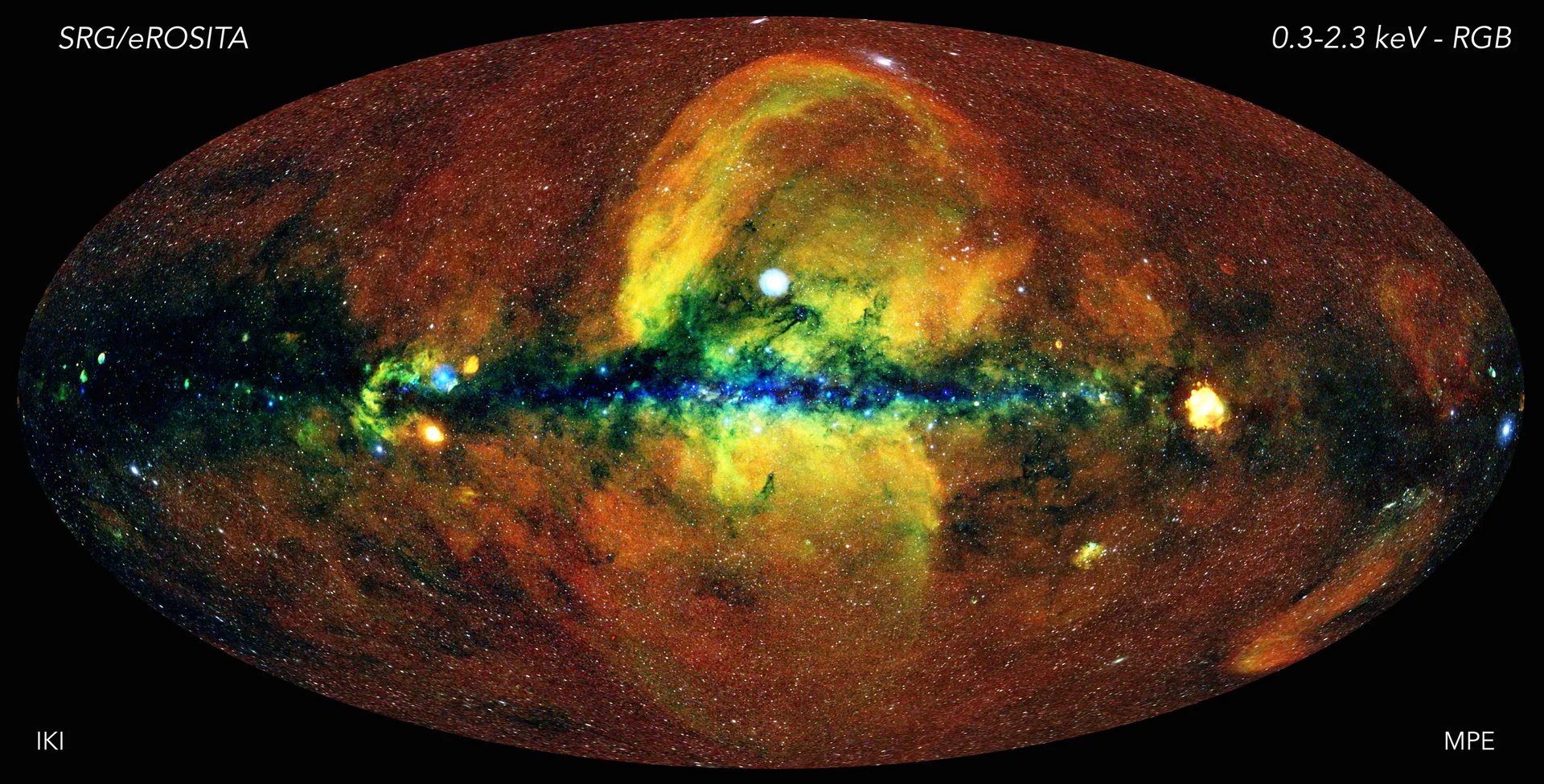
Two million X-ray sources—a sky of black holes tearing spacetime apart, supernova remnants still screaming. But the real headline isn't the census; it's the one faint ember that refuses to follow the spreadsheet.
A Bonn team turned to the outermost fringe of a massive cluster, where cold intergalactic threads feed fresh gas into the gravitational maw. Emission from that accretion region had never been caught before. And when they finally saw it, the gas was too hot—warmer than our models of cosmic structure growth allow.
That mismatch matters because this is where the universe's visible architecture is built. Gas falling along the cosmic web carries the story of dark matter's scaffolding, the missing baryons, and the thermodynamics of everything we can't see directly. If the infalling material arrives hotter than expected, our understanding of how clusters assimilate their surroundings just took a body blow.
A catalogue of two million sources is a map. A single cluster that doesn't fit is a compass. The universe keeps its books in X-rays, and one stubborn remainder is telling us we've misread a chapter.